EXPLAINING THE STRUGGLE FOR HUMAN RIGHTS IN RUSSIA |
|
|
Hello and welcome back to the Digest. |
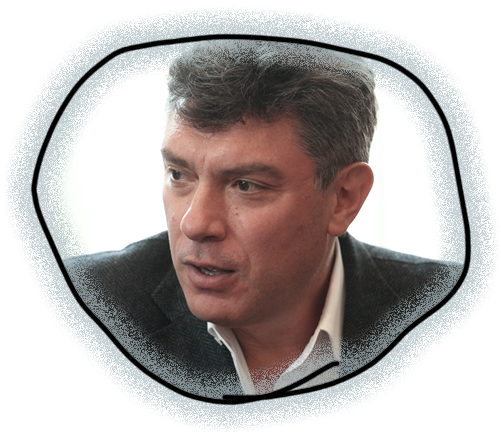
Today I want to write about Boris Nemtsov, a momentous figure in recent Russian history. |
In solidarity, Dan Storyev |
|
|
I want to promote another newsletter here, this time from Holod media. Media Pulse offers monthly updates on the state of Russian independent media combined with a digest of the most impactful investigative reports and articles. Highly recommended for Russia watchers and analysts. |
|
|
Trigger warning:
This is a newsletter about Russian repressions. Sometimes it will be hard to read. |
|
|
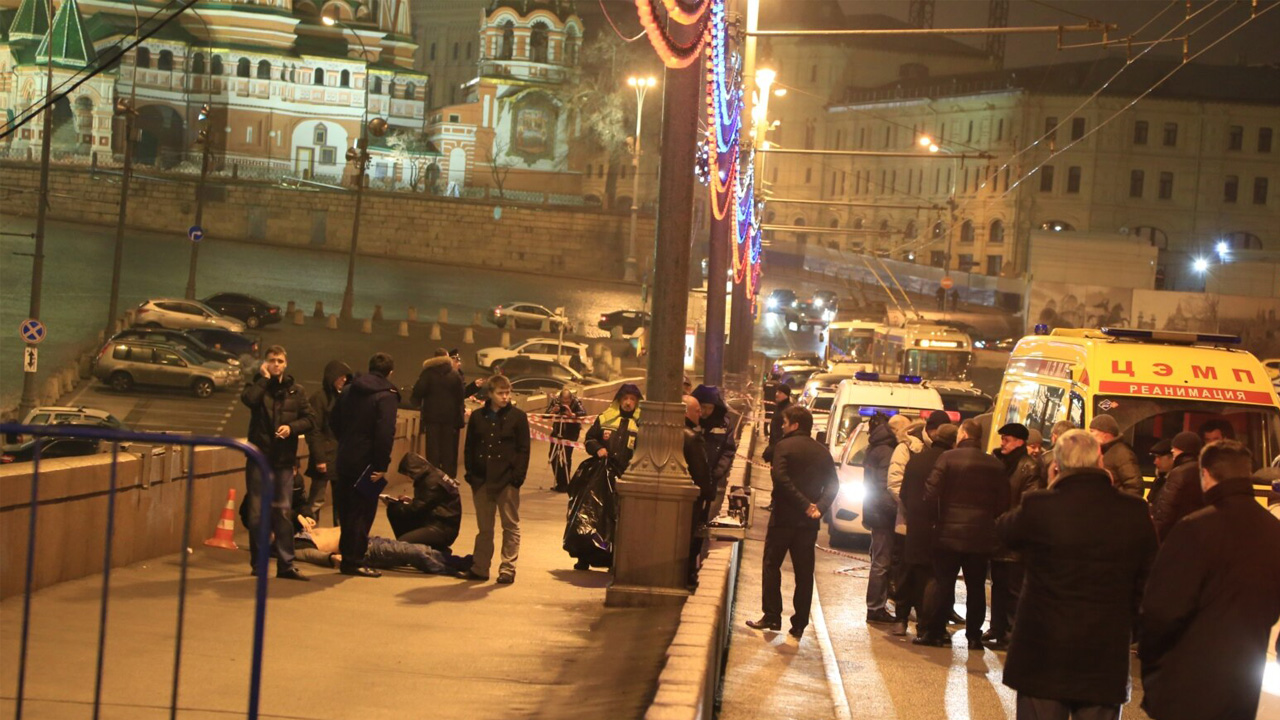
Last week Russia marked 10 years since the assassination of Boris Nemtsov. Nemtsov, a maverick opposition politician, was murdered in front of the Kremlin — and with him, on the cobblestones of the Bolshoy Moskvoretsky Bridge, died a political epoch, which was unlike anything Russia ever experienced. |
|
|
Boris Nemtsov’s murder scene, 27 February 2015 / Photo: RFE/RL |
|
|
Nemtsov lived through and embodied the turbulent politics of Russia’s democratic transition and then its backsliding into authoritarianism. Nemtsov grew up in the closed town of Gorky (now Nizhny Novgorod). Closed towns dotted the Soviet map, they were typically based around defence installations or laboratories, and their denizens needed special permission to travel in and out. We covered one such closed town in our article on a dissident fighting Russia’s nuclear industry.
|
Born in 1959, Nemtsov began his career as a physicist, thus becoming a part of the Soviet intellectual elite. Back in the Soviet era academia, especially hard sciences, became a refuge for dissidents and free thinkers. They were occasionally allowed more freedoms than the average citizen, forming communities of everyday resistance right under the Soviet state’s nose — no wonder that one of the most influential Soviet dissidents, Andrei Sakharov, was a nuclear physicist by trade.
|
|
|
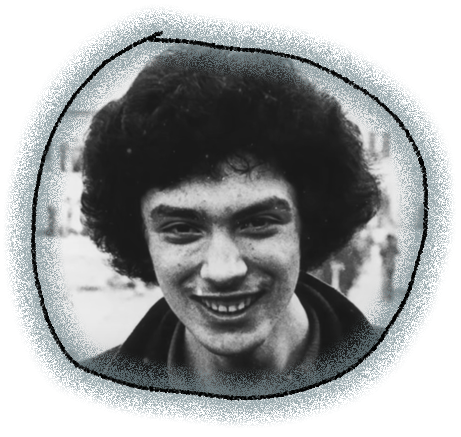
Even in high school Nemtsov was known as a free thinker who could openly question authority. When Gorbachev unleashed his reforms in the late 1980s, Nemtsov was enthusiastic about joining the burgeoning local politics. He put his name on the political map when he organised a protest movement in his hometown in the wake of the Chornobyl disaster. The protest movement eventually prevented the construction of a nuclear plant in his city.
|
| Boris Nemtsov during his school years / Screenshot from “Nemtsov” documentary film, directed by Vladimir Kara-Murza |
|
|
Nemtsov vehemently supported the anti-communist forces and pursued capitalist, right-leaning policies. In a way, his politics would hit home for any moderate Republican or Libertarian in the United States. Nemtsov’s priority was restoring, through democracy, a sense of dignity in the Russian people. Throughout his career he repeatedly stated the importance of dignity and self respect in his own life as well. |
|
|
A staunch ally of Russia’s first President Boris Yeltsin, Nemtsov became governor in his home region of Nizhny Novgorod. During his 1991-97 tenure Nemtsov achieved many real outcomes — building bridges, improving living standards, and re-paving roads. Urban legend has it that Nemtsov would personally test a new road by driving a couple kilometres on it with a glass of vodka sitting atop his car. Only if the vodka did not spill was the road approved.
|
|
|
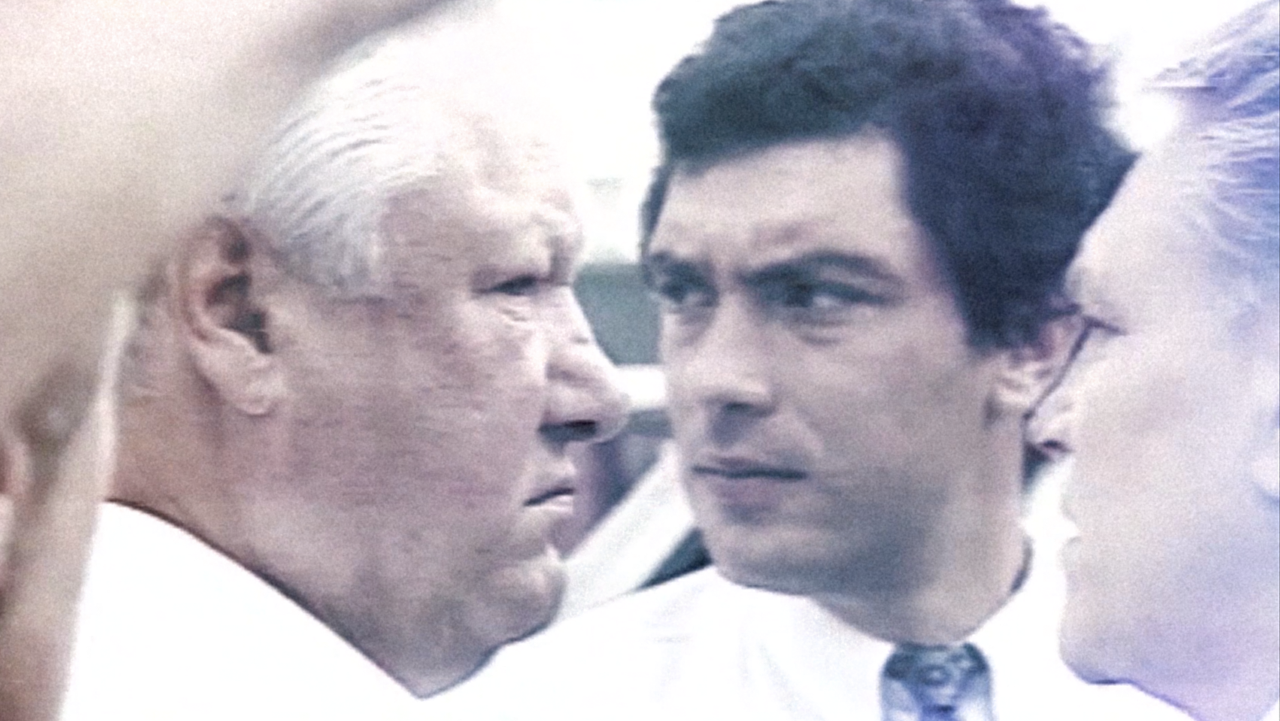
Making Nizhny Novgorod a model free market city and region, to the point that even Margaret Thatcher visited, Nemtsov was well-received in Moscow. He got involved in federal politics as well, collecting a million signatures against the first Chechen War. There he became a part of Yeltsin’s cabinet, and Yeltsin publicly projected him as his handpicked successor for the presidency. |
|
|
Boris Nemtsov with Boris Yeltsin in the 90’s / Screenshot from “Nemtsov” documentary film, directed by Vladimir Kara-Murza |
|
|
Nemtsov became the face of the widely unpopular free market reforms which saw living standards plummet and inequality skyrocket. However, he was also notable for his charisma and grassroots appeal, whether he was talking to officials or miners on strike, with whom he occasionally shared a drink. In 1998 Nemtsov even served as Russia’s deputy PM.
|
But then, his fortunes soured as he entered a conflict with the clique of oligarchs, who used the power of their TV channels to discredit the young politician. Eventually, the oligarchs and Yeltsin settled on Putin — once Nemtsov’s colleague in the Yeltsin administration — as Russia’s second ever president. |
The rest is history. Putin, brought into power by the Yeltsin administration, rapidly moved to tighten his grasp on power through censorship and repression. Nemtsov’s party, the Union of Right Forces (SPS) lost its seats in parliament. By the mid-2000s Nemtsov became a key figure in the “non-systemic opposition” — meaning, a real opposition that the Kremlin excluded and isolated from the broader political system. |
|
|
Donate to OVD-Info to keep us running |
|
|
Nemtsov’s fate is an illustration of the total delegitimization of real, lively politics in Russia, and the movement of opposition politicians into a parallel reality, wherein they had little to no ability to influence policy.
|
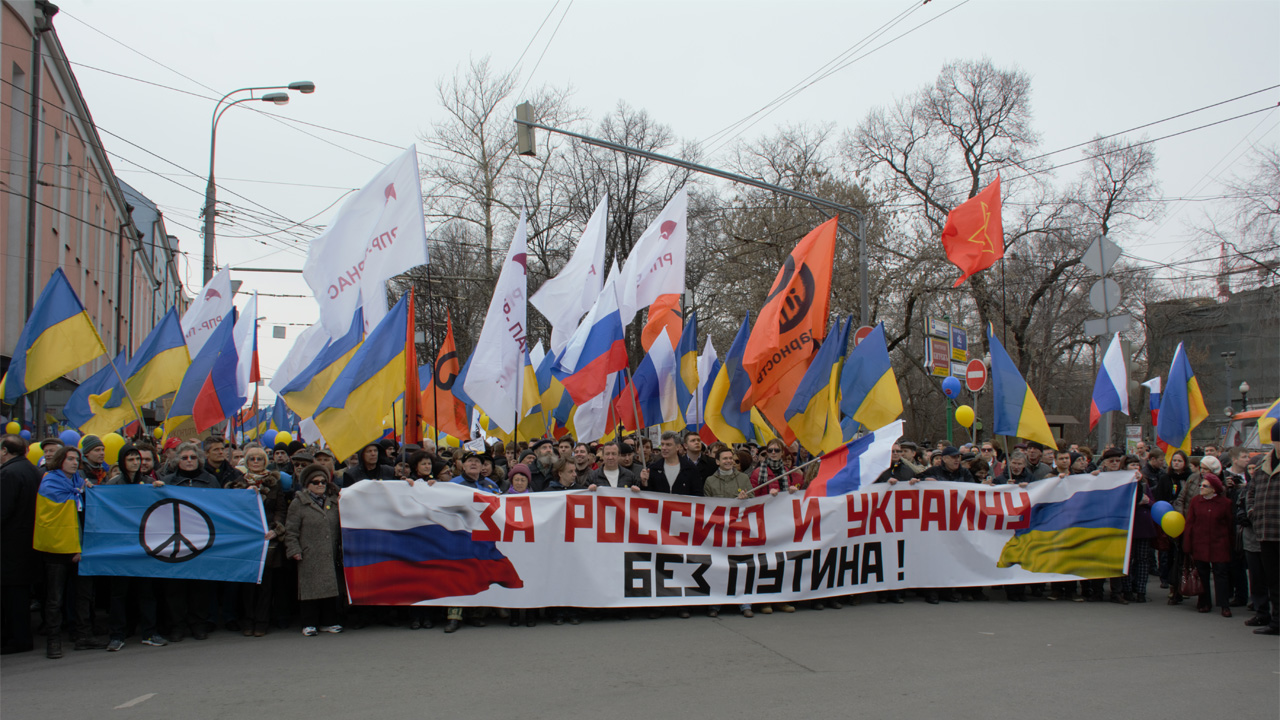
Nemtsov accepted the role of an opposition politician, a street politician — leading and organising marches and rallies, mentoring young dissident politicians like Ilya Yashin and Vladimir Kara-Murza. He campaigned against the Kremlin’s 2014 invasion of Ukraine, and successfully lobbied the US Congress to put sanctions on Russian politicians.
|
|
|
Boris Nemtsov and Ilya Yashin at the “March of Peace” against Russia's annexation of Crimea, 15 March 2024 / Photo: Dhārmikatva, Wikimedia Commons, CC BY-SA 3.0 |
|
|
He worked relentlessly against the Kremlin and, naturally, feared for his life. Unfortunately, his fears were not in vain. Nemtsov was murdered 27 February of 2015, shot on a bridge leading to the Kremlin. It’s still unclear who killed him. Supposedly, it was a group of Chechen islamists later imprisoned for decades. Zaur Dadaev, the man who confessed to shooting Nemtsov, later said the confession was the result of torture by the Russian security services.
|
Another theory is that Nemtsov was murdered by associates of the Chechen dictator Ramzan Kadyrov, Putin’s staunchest ally — as an act of vengeance for Nemtsov’s anti-Putin advocacy. In 2014, the year before his murder, Nemtsov spoke at a pro-peace forum in Ukraine: “just so you understand, Vladimir Putin is fucking insane”. |
|
|
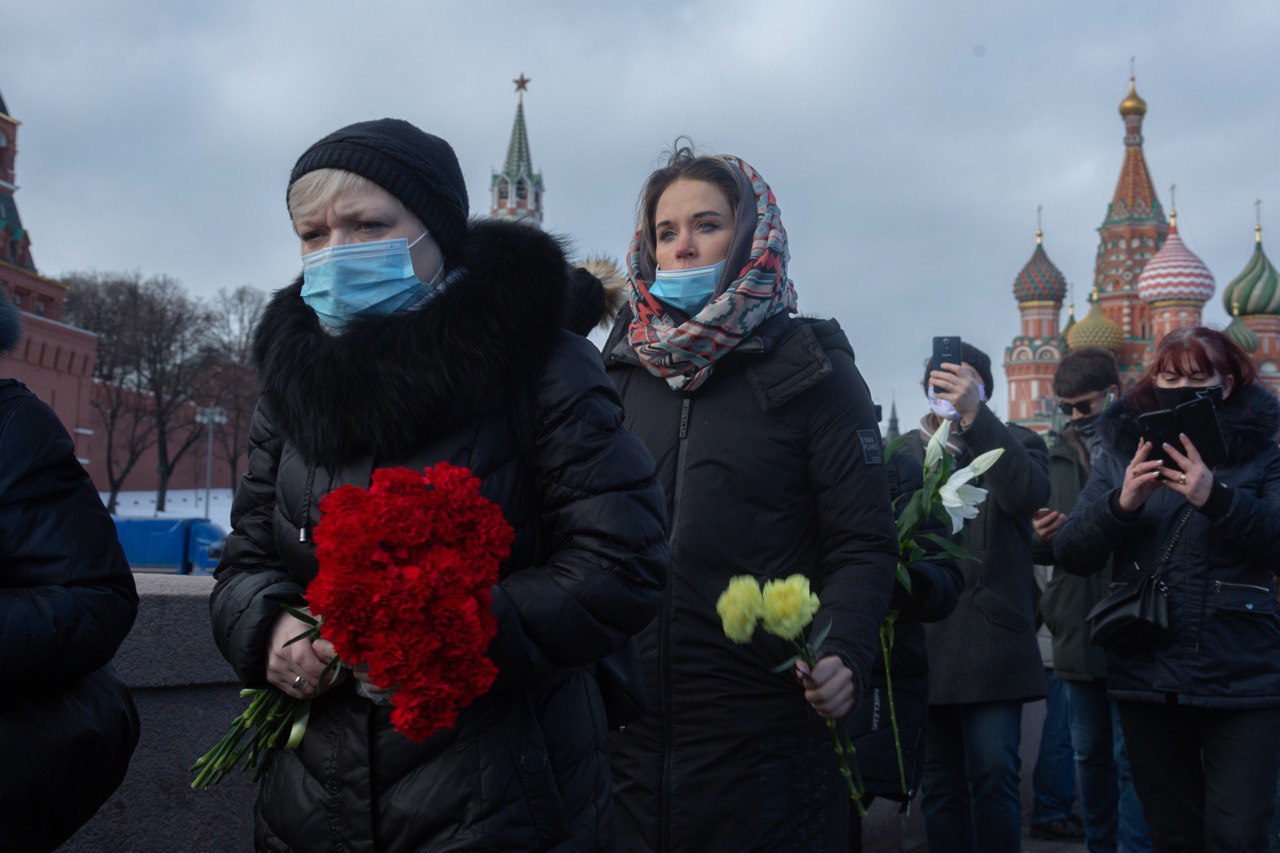
Nemtsov’s death shook up Russia’s dissident community. It is seen as a rubicon moment to this day. The Moskvoretsky bridge is colloquially known as Nemtsov Bridge. Nemtsov left a mark on Russian history. To this day a group of dedicated supporters maintain a vigil and a memorial at the site of his murder — despite the constant attempts of Kremlin-affiliated forces to destroy it. When I could still visit Moscow I attended Nemtsov Bridge yearly. It was a place of community. On anniversaries of Nemtsov’s death, politicians and everyday people gathered there to commiserate and show their defiance to the Kremlin. I saw them often make a play on Nemtsov’s given name — Boris. In Russian, it sounds similar to the verb “boris’”, which can be roughly translated as “keep on fighting”.
|
|
|
Nemtsov Bridge, 2021 / Photo: Dan Storyev |
|
|
Most of the information in this letter is based on the two documentary films about Nemtsov: The Man Who Was Too Free and Nemtsov. Big thanks to the authors.
|
|
|
Please answer our questionnaire so we can better understand our audience! |
|
|
Sources cited in the reading list are not necessarily aligned or in a formal partnership with us. It is just what the editor finds interesting. |
|
|
The Digest is created by OVD-Info, written by Dan Storyev, edited by Dr Lauren McCarthy |
OVD-Info English newsletter privacy policy: how we work with your data |
|
|
|