EXPLAINING THE STRUGGLE FOR HUMAN RIGHTS IN RUSSIA |
|
|
Hello and welcome back to the Digest. |
Today we have a special format issue. It is a slightly abridged version of an OVD-Info explainer — these are a new type of article we are planning to release every month. Today’s article is on transnational repression — written by me and Inna Bondarenko. Keep an eye on the website for the full version! |
In solidarity, Dan Storyev |
|
|
Donate to OVD-Info to keep us running |
|
|
Trigger warning:
This is a newsletter about Russian repressions. Sometimes it will be hard to read. |
|
|
You might be thinking that the Kremlin’s repression is limited exclusively to inside Russia, or at worst, to Ukraine. in fact, it stretches far beyond, reaching across mountains and oceans — targeting Russians abroad.
|
The Kremlin has several tools of transnational repression up its sleeve. The methods go beyond legal mechanisms and extend to covert maneuvers, diplomatic pressure and even harassment of family members. Here we outline some of the most common methods the Kremlin uses to crack down on dissidents abroad: |
|
|
Putin’s Russia is notorious for exploiting technically legal tools like Interpol and extradition treaties to go after the Kremlin’s opponents. As of 2021, there were 196 countries in Interpol, but Russia is responsible for over 38% of Interpol Red Notices — the Kremlin uses them as a tool of repression against dissidents.
|
|
|
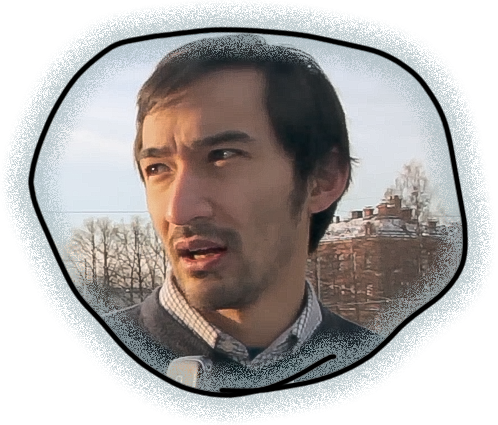
Take the 2012 case of Petr Silaev. The young anti-fascist fled Russia after protesting the destruction of the Khimki Forest outside of Moscow. He was swiftly detained in Spain after becoming the subject of a Red Notice. Spanish authorities initially complied, even adding on their own made up charge of terrorism, in order to justify the arrest, as the Russian request only mentioned “hooliganism”. But eventually Petr was able to remain in the EU, thanks in large part to Finland granting him refugee status.
|
| Petr Silaev, 2014 / Photo: “Komitet19” YouTube channel |
|
|
In the former Soviet space the situation is especially dire, as the Kremlin often has the most influence there due to a complex bouquets of treaties and personal relationships. In Kazakhstan, for instance, the Kremlin demanded extradition of several anti-war activists. In Armenia, we also know of a few extradition requests. It is however important to note that some nations are choosing to resist Putin’s requests. In Armenia, the local authorities have yet to extradite anti-war activists, even though they do send police officers to investigate ‘suspects’. We covered such a case in greater detail in our article and digest on Natalya Taranushenko — an elderly school teacher who had to flee Russia for openly opposing the war and was later apprehended and then released in Yerevan.
|
When legal procedures fail to achieve the desired effect, the Kremlin can resort to more brutal methods. This is a rather tricky topic, as it exists in the liminal space between repression and spycraft. Those targeted aren’t necessarily dissidents in the traditional sense — sometimes they’re former intelligence operatives or rival oligarchs.
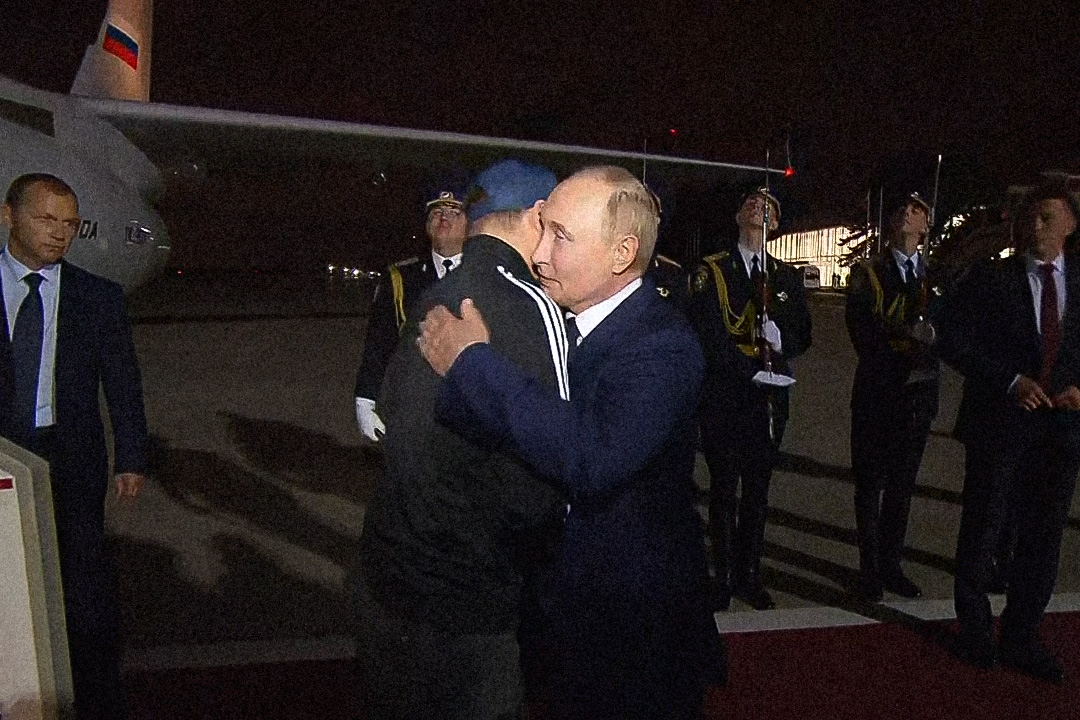
Still, this aspect is important to keep in mind. Cases may include kidnappings, assassinations, and poisonings. For instance, in 2019, a Kremlin agent murdered Zelimkhan Khangoshvili, an exiled Chechen militant, in Berlin. The murderer, Vadim Krasikov, whom Putin repeatedly praised, was released from a German prison and sent back to Russia during a historic prisoner swap. Or take the three exiled reporters who have reported poisoning symptoms — two were poisoned in Germany and one in Georgia.
|
|
|
Vladimir Putin embracing Vadim Krasikov after the prisoner swap, 1 August 2024 / Photo: kremlin.ru |
|
|
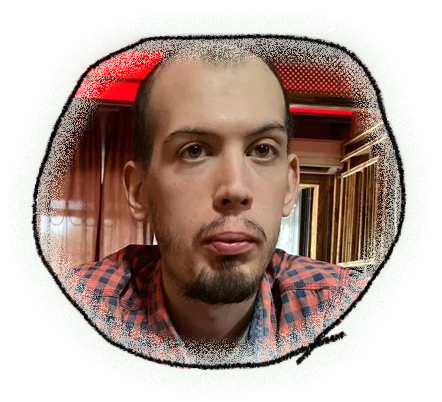
A particularly clear example of a dissident being targeted is the case of Lev Skoryakin — an anti-fascist dissident who sought safety in Kyrgyzstan. Last year, he was kidnapped by Russian agents and disappeared, until our lawyer found him in a Moscow jail and fought for his eventual release. I wrote more about him in Digest #33.
|
| Lev Skoryakin / Photo: courtesy of Lev Skoryakin |
|
|
Russia still wields influence over some foreign governments, pressuring them to extradite and harass Russian exiles. This often involves backroom deals or threats of economic or political retaliation.
|
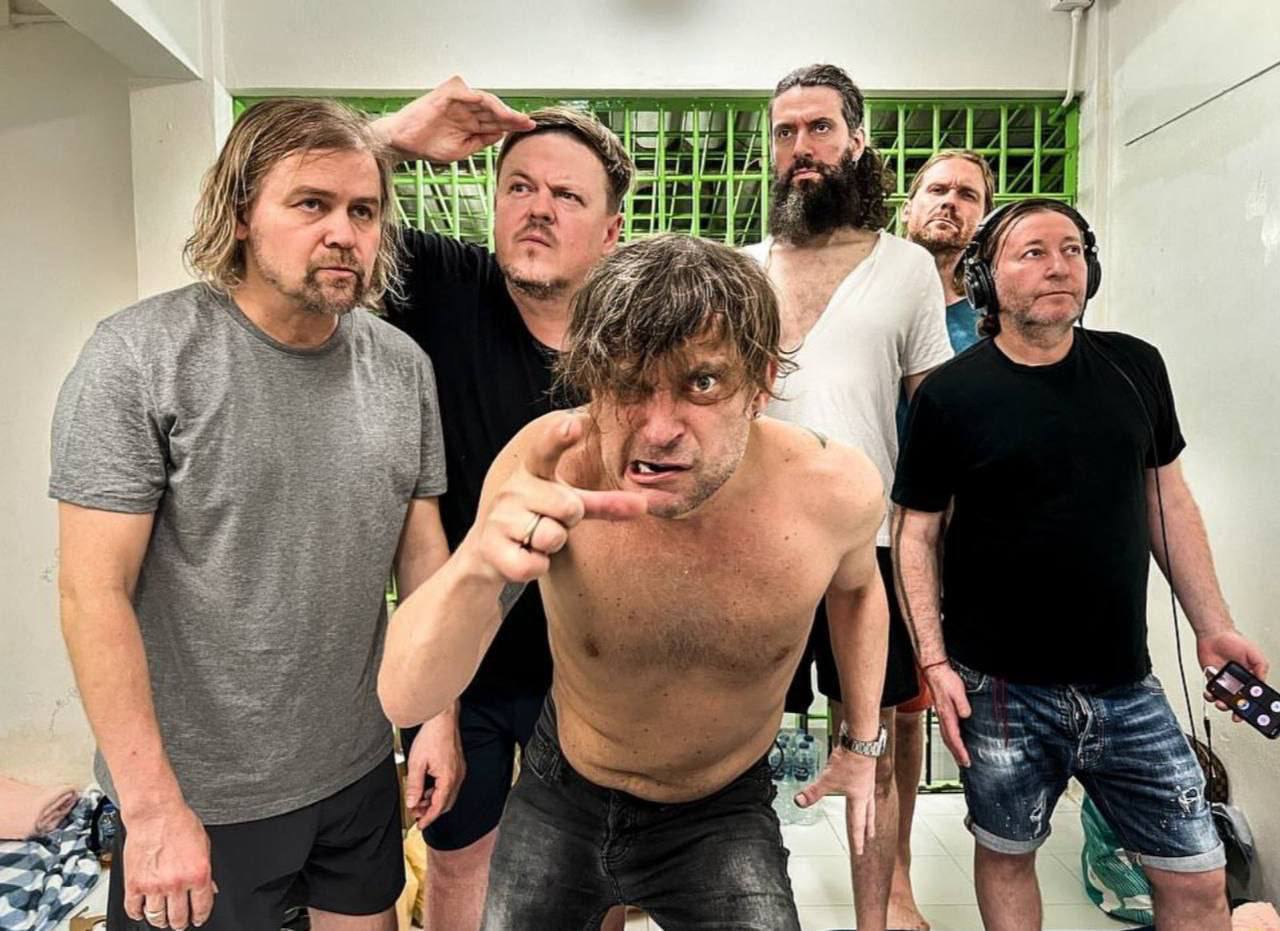
The most infamous example here is the case of the maverick Russian-language rock band Bi-2, who were critical of the war in Ukraine. They were detained in Thailand, apparently on a secret request from the Russian embassy, and threatened with extradition to Russia. Most of the musicians did not even have Russian passports, but the threat was nevertheless imminent. Kremlin figures were even openly gloating about the situation which was eventually resolved reportedly thanks to the combined efforts of Israeli, Australian and US diplomats.
|
|
|
Bi-2 band members during detention in Thailand, February 2024 / Photo: Bi-2 social media |
|
|
This is not an isolated case. Well-known Russian artist Maxim Galkin was fined and pushed out of the UAE for speaking out against the war, while anti-war Russian nationals were deported and harassed in Kyrgyzstan and Vietnam, just to name a few more cases. If you would like to read about them in further detail, check out our #29.
|
Not all of Russia’s repression involves violence – the Kremlin might also use less overt tactics like surveillance. Opposition leaders have repeatedly claimed that they were surveilled by the Russian government, like opposition figure Anastasia Shevchenko who left Russia in 2022 and has since reported that she is being watched.
|
|
|
Galina Timchenko / Photo: Committee to Protect Journalists, CC BY 2.0 |
|
Russian independent media, in particular, has been rocked by the news of the use of Pegasus spyware on some exiled journalists. Pegasus is an Israeli spyware program beloved by authoritarians around the world— and it is likely that the Kremlin used it to gather data on exiled media professionals. Galina Timchenko, the head of maverick exiled media Meduza was reportedly surveilled with Pegasus. |
|
|
Generally speaking, surveillance of high-profile exile figures is an open secret. And aside from sending agents, the Kremlin is also known to be pressuring activist exiles into spying on each other, creating a sense of paranoia. One such activist revealed the process of FSB infiltration to Meduza.
|
|
|
Remember that exiled Russians often remain in danger even when abroad. The tools we outline here only scratch the surface. And remember, that while dissidents are abroad, their relatives in Russia remain at risk.
|
|
|
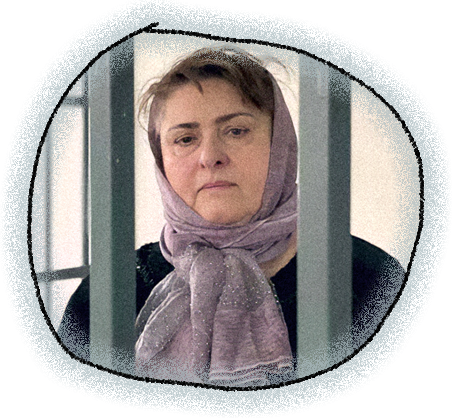
Going after relatives was once limited only to certain regions like Chechnya, but it is now spreading across the entire country. Relatives of the Kremlin’s opponents are pressured, threatened or even detained with the aim to silence them. Parents, children, and spouses have to deal with searches, calls and visits from security forces, along with arrests, intimidation, and threats.
|
|
Zarema Musaeva, jailed mother of Chechen activists. We covered her story in Digest #17. Just today, her lawyer reported that Zarema’s health has rapidly deteriorated — she has insulin-dependent Type 2 diabetes / Photo: Crew Against Torture
|
|
|
If you are wondering what you can do to support Russian exiles, you can support initiatives, public and private, to provide shelter and platforms for Russian anti-war exiles, or talk to local Russian anti-war exile organizations and ask about their specific needs. Russian exiles have to live in an atmosphere of constant pressure, but with more support their burden can surely be eased.
|
|
|
Please answer our questionnaire so we can better understand our audience! |
|
|
Sources cited in the reading list are not necessarily aligned or in a formal partnership with us. It is just what the editor finds interesting. |
|
|
The Digest is created by OVD-Info, written by Dan Storyev & Inna Bondarenko; edited by Dr Lauren McCarthy |
OVD-Info English newsletter privacy policy: how we work with your data |
|
|
|