EXPLAINING THE STRUGGLE FOR HUMAN RIGHTS IN RUSSIA |
|
|
Hello and welcome back to the Digest. |
Apologies for the irregular timing of our issues over the last few weeks. I was on sabbatical, but now I am all yours. Also — a warm hello to all of you I met in Berlin, Mexico City, Warsaw and Prague. |
Today we are covering two important topics — the continuing persecution of queer Russians and historical memory. |
In solidarity, Dan Storyev |
|
|
Donate to OVD-Info to keep us running |
|
|
Trigger warning:
This is a newsletter about Russian repressions. Sometimes it will be hard to read. |
|
|
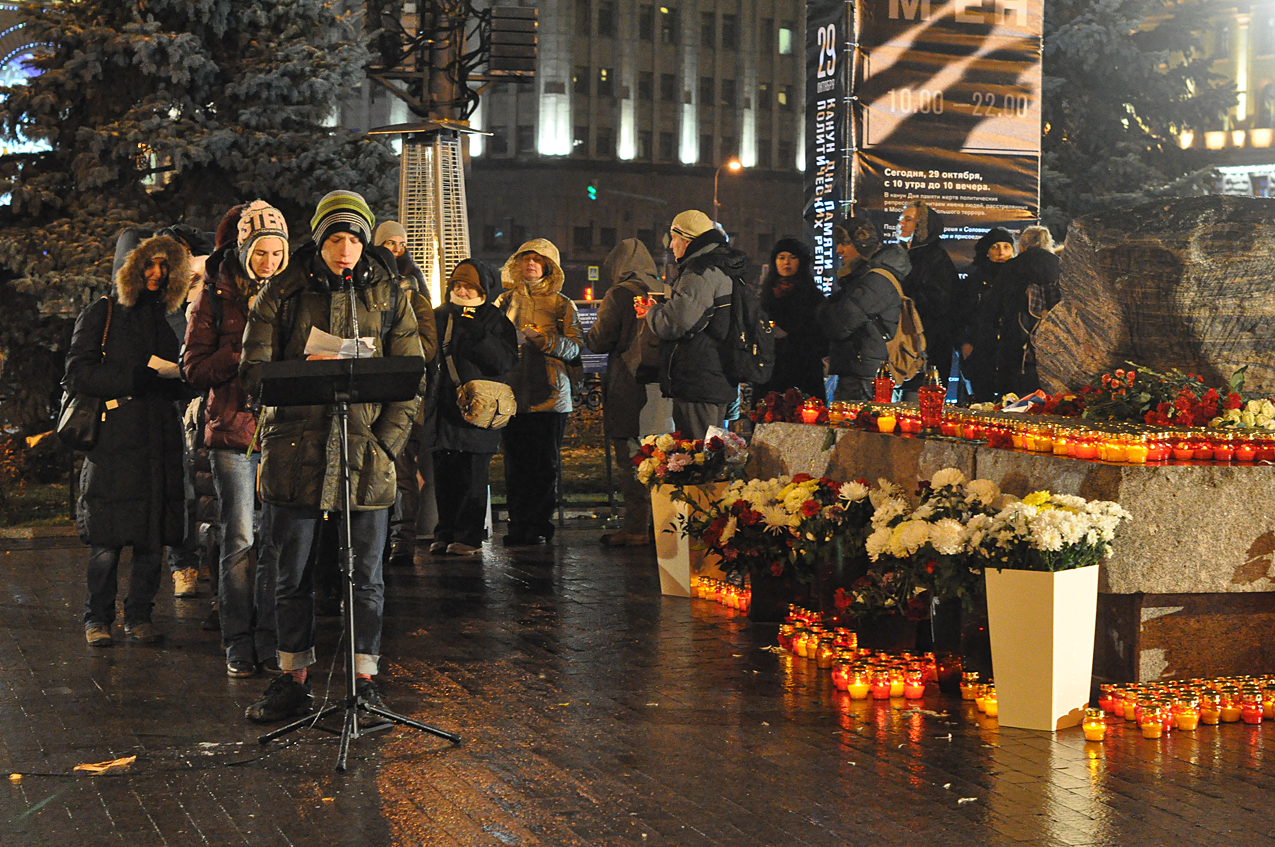
Last week, October 30, Russians marked the day of the political prisoner — a tradition started and maintained by the Memorial movement decades ago. I already covered this tradition in our issue last year — read that to get more background on what Memorial is. For this issue I would like to focus specifically on the tradition we call “returning the names”, and how the Kremlin is doing their utmost to suppress it and other ways of memorializing the names of Russia’s political prisoners. The tradition started in 2007 and consists of mass gatherings in various cities throughout the world, mostly in the former USSR.
|
|
|
“Returning the names” at the Solovetsky Stone, Lubyanka square, Moscow, 2016 / Photo: David Krikheli, Wikimedia Commons, CC-BY-SA 4.0 |
|
|
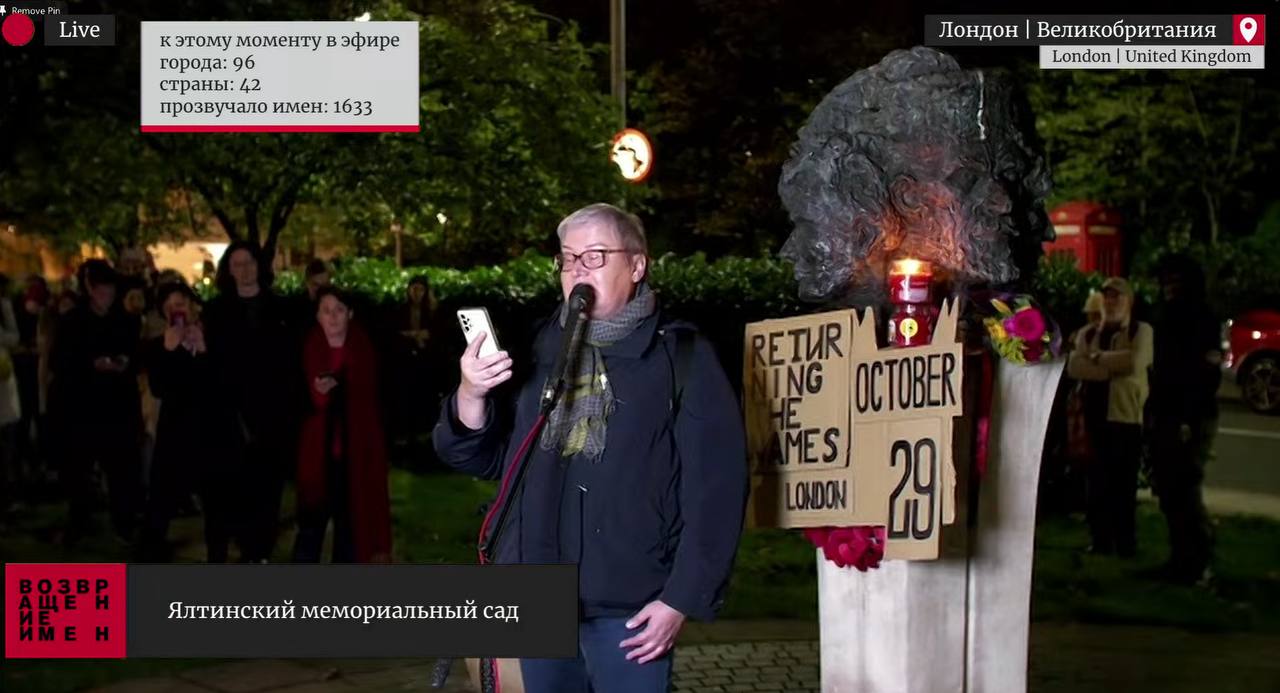
On October 29, the night before the day commemorating political prisoners, people gather together, typically in front of memorials to political prisoners to solemnly read out the names of those who perished in Stalinist repressions. Over the past five years, Russian authorities have refused to give permits to the gatherings, which they justify through a gumbo of made-up causes ranging from anti-COVID measures to construction work.
|
|
|
Screenshot of the 2024 broadcast of “Returning the names”. Since 2020, the event has been held online / “Возвращение имен” YouTube channel |
|
|
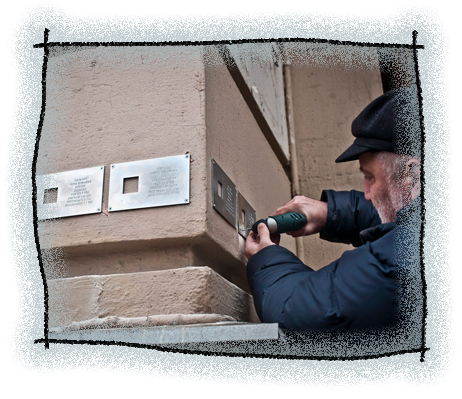
The other initiative launched by Memorial is called “Last Address” — they place small plaques with the names of repressed people on the houses where they lived, integrating historical memory into city landscapes. There are over two thousand of these plaques and there should be many more, as Stalin’s cruelty touched so many Soviet families — in fact, some of my own relatives have been commemorated through the Last Address initiative.
|
| |
Installation of “Last Address” plaques / Photo: “Последний адрес” Facebook page |
|
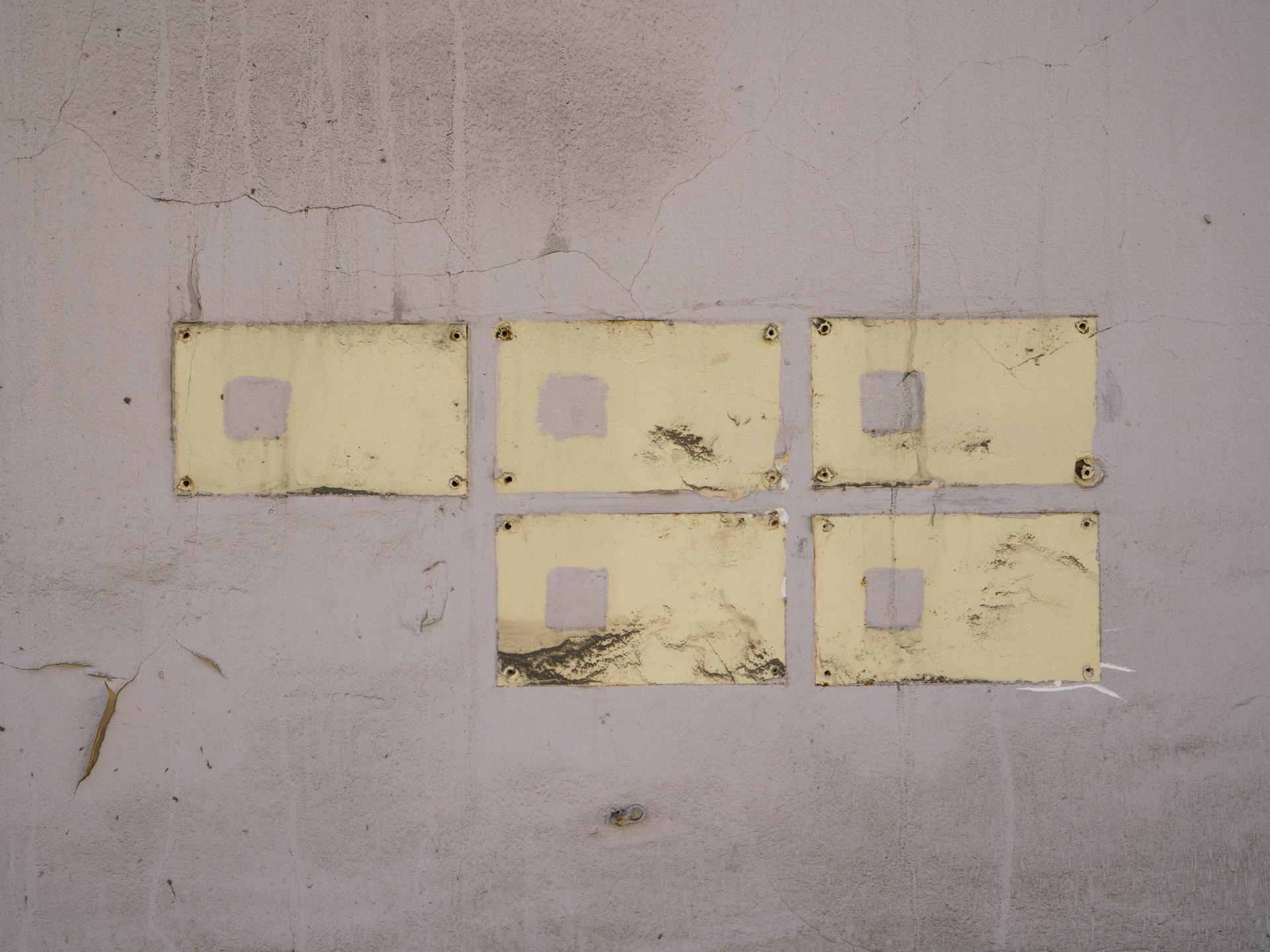
The tradition was of course not to the Kremlin’s liking, and recently the plaques began simply disappearing. Before the 2022 invasion of Ukraine the authorities were already removing them, but now the process has sped up. A Last Address coordinator Oksana Matveevskaya told us that “a mass attack began a year and a half ago — entire districts are now purged.” Sometimes, the authorities’ agents glue Stalin’s portraits over the plaques or graffiti “Trotskyist scum” over them.
|
|
|
Irina Flige, the director of Memorial’s research division says that the authorities also began clandestinely erasing entire memorials by the dozen — especially if they are dedicated to repressed Ukrainians or Poles. |
|
|
Traces of dismantled “Last Address” plaques on a Moscow street, May 2024 / Photo: Alexander Gronsky |
|
|
“The awareness of the criminality of the government, the catastrophe of terror leads to these monuments becoming contextualized as modern, as if they are dedicated not just to the victims of the 1930s, but are monuments to today’s victims of the criminal regime,” notes Flige. She is right — memorials to dissidents became gathering points for people after the murder of Alexei Navalny, for example.
|
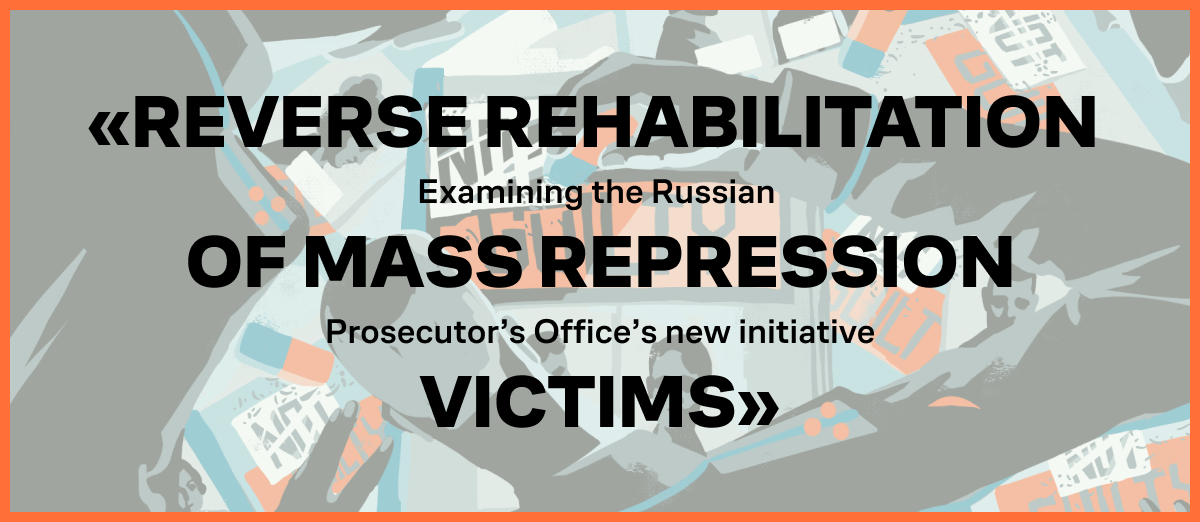
If you would like to find out more about this topic read our feature article on the Kremlin’s attempts to de-rehabilitate dead political prisoners. |
|
|
After Stalin’s death, more than four million citizens who had been sentenced to execution or labour camps were rehabilitated in the USSR and later in Russia. Now, the General Prosecutor’s Office is preparing to overturn some of these decisions. Here’s what it really means.
|
|
|
Another wave of queer persecution |
|
|
Unfortunately, there are some topics that I have to come back to again and again. One such theme is the persecution of queer people in Russia. We have covered it often in the Digest and elsewhere, and we put particular emphasis on the new repressive legislation that the Russian authorities have created.
|
Over the past decade the Kremlin has embarked on a campaign against queer people. The authorities dress it up with the language of traditional values and protecting sovereignty — often language lifted near verbatim from Western conservative discourse. |
You can read about these laws in our articles and past issues of the Digest. But today I would like to cover the impact of the repressive legislation on queer Russians on the ground over the last several months.
|
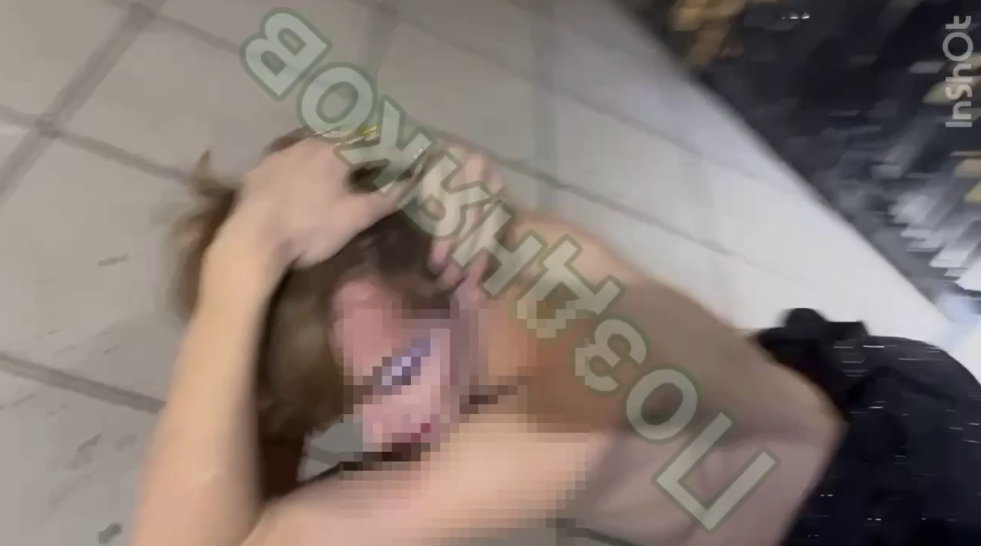
In Siberia’s Chita, the authorities raided a drag show. Attendees were forced to lay with their face on the ground and identify themselves. The club’s 22 year old owner was put under house arrest for “organising extremist activities”. |
|
|
Screenshot from a video of a raid on a Chita LGBTQ+ club published on far-right Telegram channels |
|
|
Detained in August, Ulyanovsk doctor Ilya Zhuravlev was officially placed in pre-trial detention in September. The authorities accuse him of satanism and that he “propagandized to his colleagues and subordinates the idea of same-sex relationships as a way to get initiated into Devil-worship”.
|
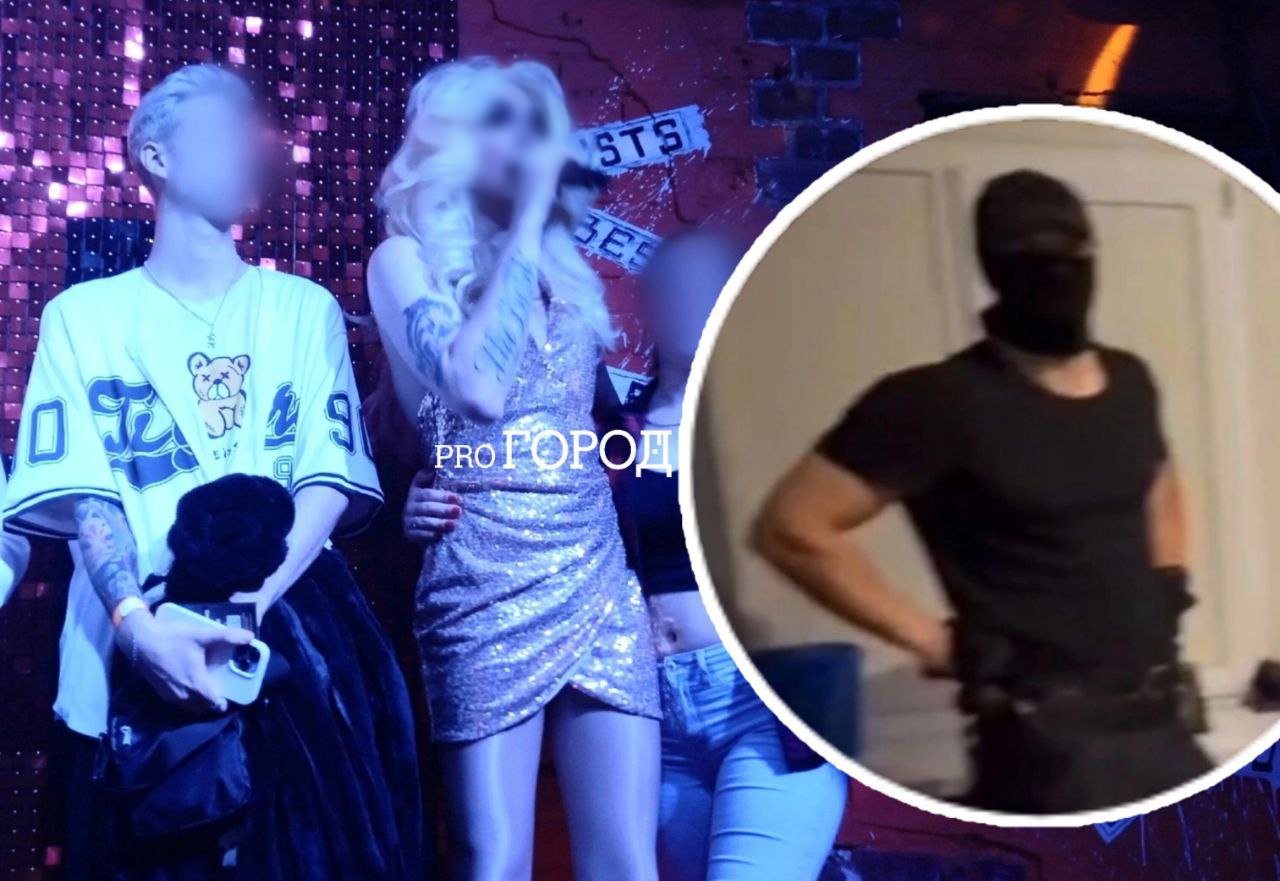
The Chita raid was not the only one. In the ancient city of Yaroslavl, police raided another drag party. We know of at least one man detained and let go after ten hours, with a citation for “gay propaganda”. Moscow clubs were also raided — police would brutally throw people on the floor and take anyone without documents on them to police stations.
|
|
|
A collage published by a local Telegram channel “About Yaroslavl” (Про Город Ярославль) to accompany news about the police raid on the Dark House club in Yaroslavl |
|
|
One can only guess where this is going — I think that the repressive campaign against queer people will keep ramping up, as the Kremlin needs an image of an internal enemy to build unity in its wartime regime.
|
|
|
Please answer our questionnaire so we can better understand our audience! |
|
|
Sources cited in the reading list are not necessarily aligned or in a formal partnership with us. It is just what the editor finds interesting. |
|
|
The Digest is created by OVD-Info, written by Dan Storyev, edited by Dr Lauren McCarthy |
OVD-Info English newsletter privacy policy: how we work with your data |
|
|
|