EXPLAINING THE STRUGGLE FOR HUMAN RIGHTS IN RUSSIA |
|
|
Hello and welcome back to the Digest. |
Apologies for missing an issue last week — our team went on a little break and I forgot to let you all know. Happy to inform you that we are now back on schedule. Today we have a story about Putin’s visit to remote Yakutia and a brief overview of Russia’s election season. |
In solidarity, Dan Storyev |
|
|
Donate to OVD-Info to keep us running |
|
|
Trigger warning:
This is a newsletter about Russian repressions. Sometimes it will be hard to read. |
|
|
This is something I wanted to cover last week but we ended up going on the aforementioned break. Here, I try to not just inspire hope for change and compassion for anti-war activists, but I also want you to get a better feel of the unique quirks and characteristics of Russian political culture. |
|
|
Consider the following news item: a journalist from the Yakutia region was fined roughly 400 USD because his wife held up a poster while Putin’s motorcade was driving by her. Yakutia is a region in Russia’s Siberia. It is roughly the size of India, and its infrastructure and living standards are genuinely lacking, despite an enormous wealth of natural resources. I wrote more about it in Digest #20
|
| |
|
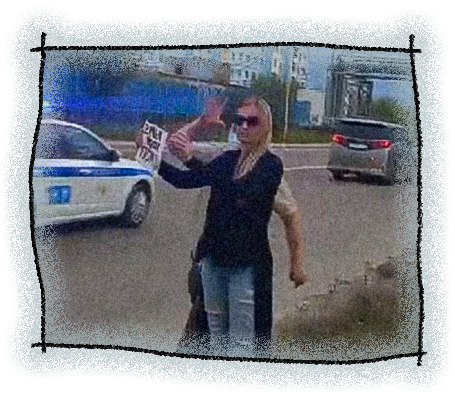
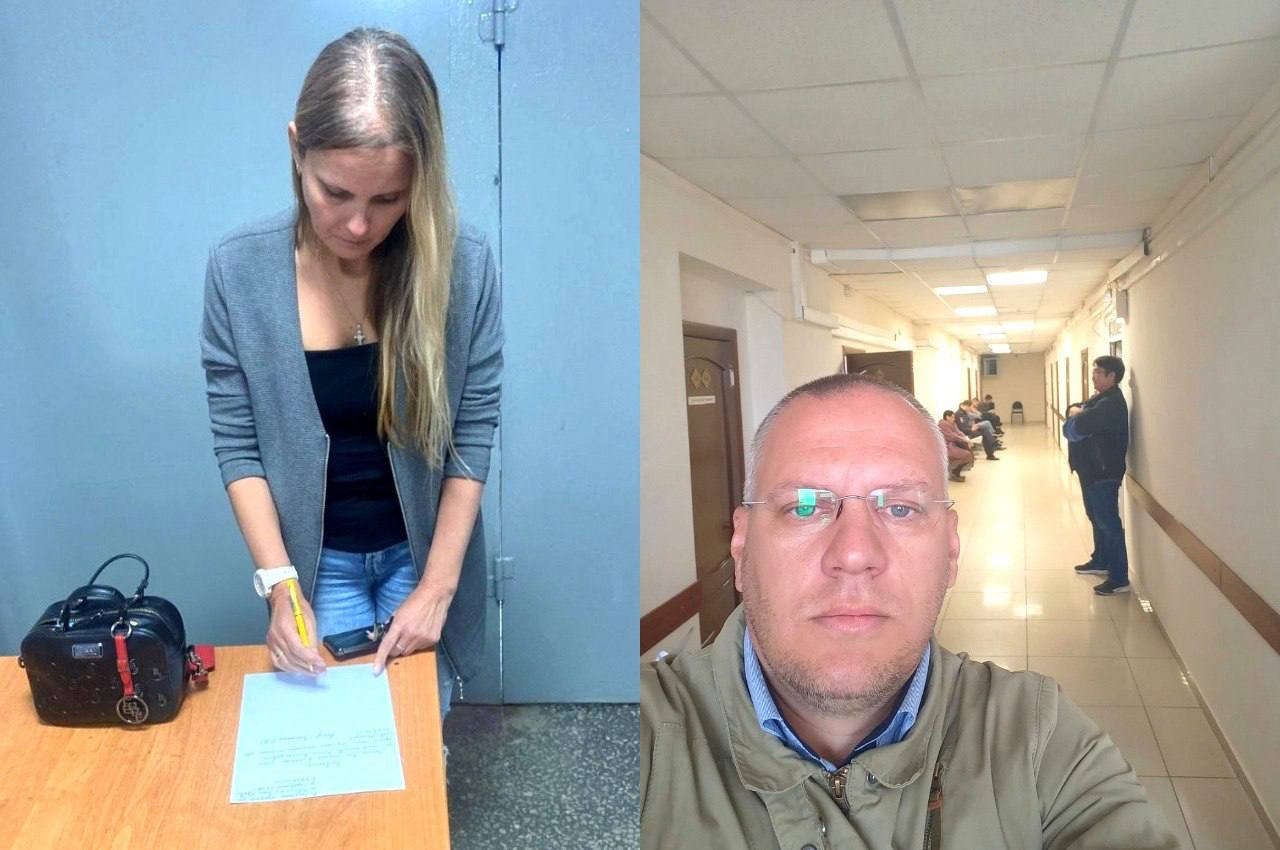
The journalist in question is Mikayel Zabolotny, who lives in Yakutia’s capital Yakutsk with his wife Yelena. On 18 June, as Putin’s motorcade was passing by, Yelena took out a letter-sized (A4) poster with “our family is asking for help” written on it. Mikayel was filming on his phone. Nearby cops immediately approached the couple and the usual process ensued. In Russian it’s called koshmarit’, from the Russian word koshmar, meaning “nightmare”. Literally “to nightmare someone”. The cops first yanked the poster from the woman’s hands. As the couple left to go home, a cop car caught up with them and briefly detained both. On 1 September Yelena was detained in the airport as she was coming back home from a visit to Vladivostok; at a court hearing the next day Yelena became ill and had to be hospitalised. At the hospital she was met by cops who wanted to detain her again and so it goes on. Unfortunately, this treatment is quite normal for Russians who dare to speak out against everyday injustices they face. Interestingly, Mikayel even said that he supports “Russia and the president” but that didn’t seem to stop the cops.
|
|
|
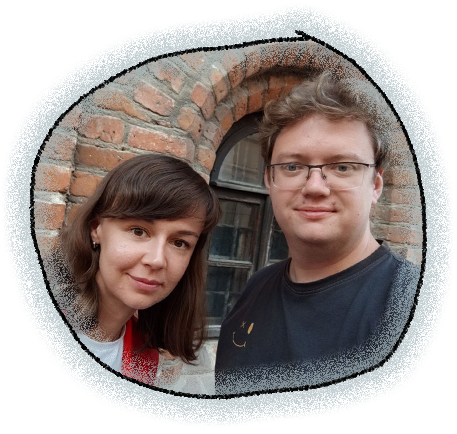
Yelena and Mikayel Zabolotny, 2 September 2024 / Collage: RusNews |
|
|
This story is almost routine, but I bring it up because it highlights an important and saddening quirk of Russian political life: the sanctity of Putin’s visits. Russia is not the hellhole some western stereotypes would have you believe — it has beautiful nature and well-developed cities. However, the inequality is often very apparent, and the infrastructure and social services away from the large cities of Moscow and St Petersburg are simply absent.
|
|
|
But local governance is not there either — it has been snuffed out by the Kremlin. Local activists and politicians are exiled or jailed, all in pursuit of building the so-called power-vertical, a system of total subjugation to Moscow. Therefore, locals in many places believe that nothing can be done by their mayors or governors. As a result, Putin’s visits get nearly sacred status. They have become the only space where citizens can ask for improvements — but are also an excuse for local authorities to clamp down on dissent.
|
|
|
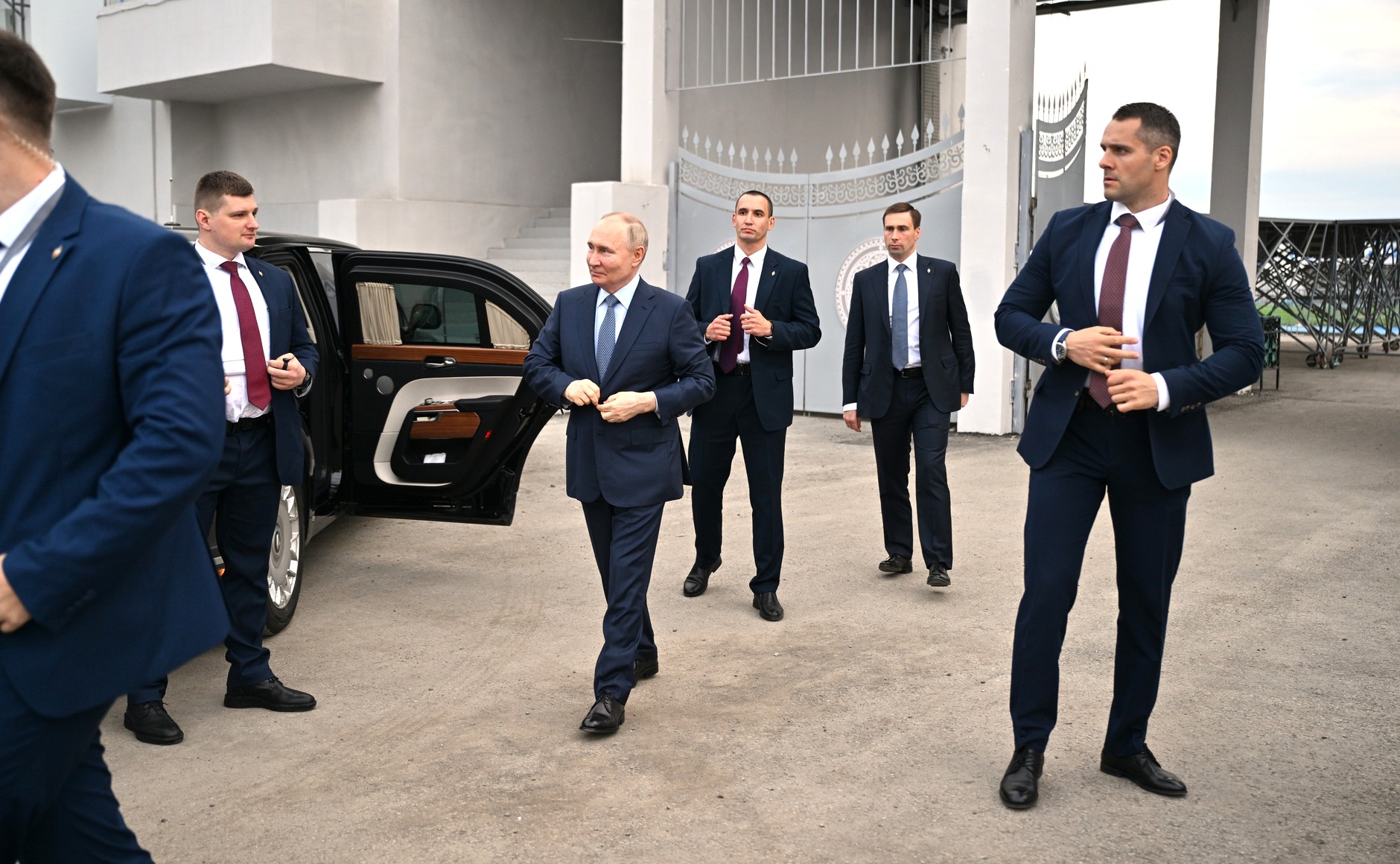
Vladimir Putin and his security staff during his visit to Yakutsk, / Photo: kremlin.ru |
|
|
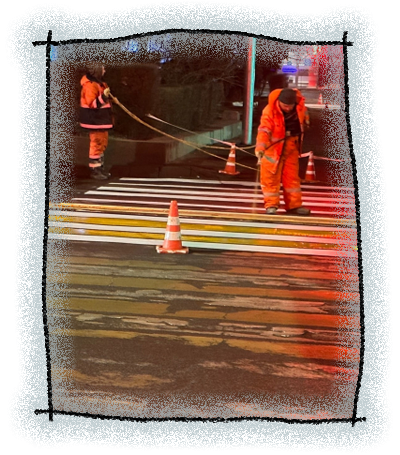
This leads to darkly humorous behaviour by local authorities. Instead of actually fixing the problems on the ground they build facades, the very same types of Potemkin villages that were built to satisfy Catherine the Great. They renovate the road Putin’s car is supposed to drive on, and they build posters and faux walls in front of dilapidated housing. Here is a recent example from the city of Volgograd which was “beautified” in advance of the President’s visit in 2023.
|
|
Road workers hastily spray-painting road markings on the route of the presidential motorcade the night before Putin's visit. Volgograd, 31 January 2023 / Photo: Sergej Ostrovskiy, Bloknot Volgograd |
|
|
And of course, the local authorities are eager to harass — koshmarit’ — activists lest they confront Putin somehow. Take the aforementioned Volgograd, where cops visited known activists, including teenagers, and warned them against speaking up. The authorities also throttled the internet speed in the entire city. |
Thus, Putin’s visits to Russia’s regions create an atmosphere of fear — the local governors are incentivised not to actually build better infrastructure, but to clamp down on activists and erect false facades hiding poverty and ruin. |
|
|
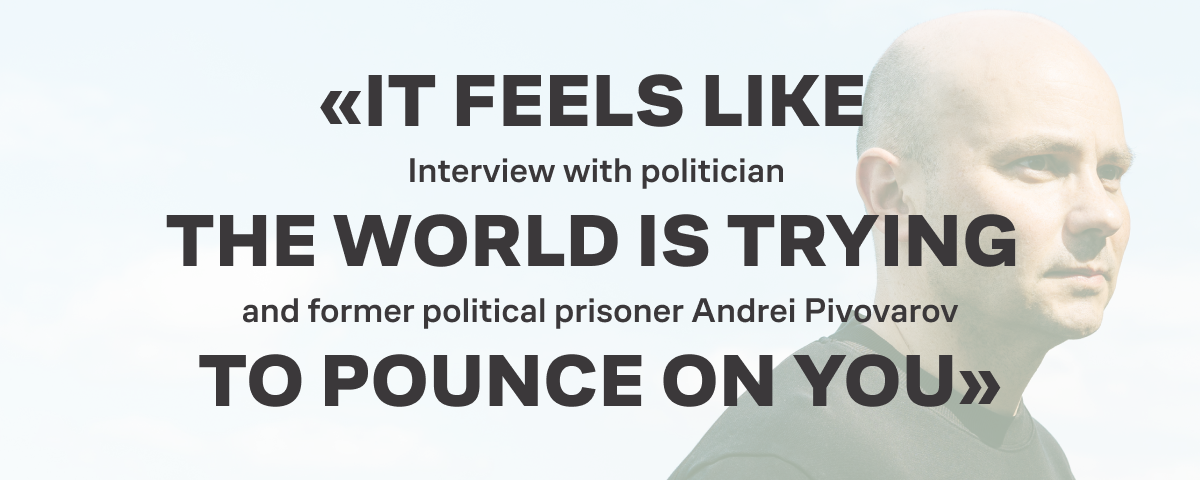
Andrei Pivovarov is the director of the movement Open Russia. In the summer of 2021 he was arrested, accused of taking part in the activities of an ‘undesirable’ organisation, and as soon as July 2022 he was sentenced to four years in prison. He spent the first six months of his sentence in SIZO-1, a special unit of the pre-trial detention, in Krasnodar. Later, he was sent to a prison in Karelia, a northern region of Russia close to Finland.
The politician spent the majority of his time in solitary confinement under special monitoring.
OVD-Info’s correspondent met with him in the German town of Bonn, several days after he was released in a large-scale East-West prisoner swap on August 1st.
| |
|
In other news, Russia had its election season last week. Three days of voting wrapped up on Sunday. On the ballots were seats in regional governorships and various city councils, including Moscow’s.
|
This might sound like an intro to a piece about normal elections, but Russia’s elections are anything but normal. They are entirely a charade orchestrated by the Kremlin. This time around, the regime was able to cement its hold over all levels of administration by clearing out nearly all semi-opposition that remained. The elections in Russia have long been a sham as I’ve covered routinely. But this month, the rigging is becoming even more omnipresent, clearing out all vestiges of opposition forces.
|
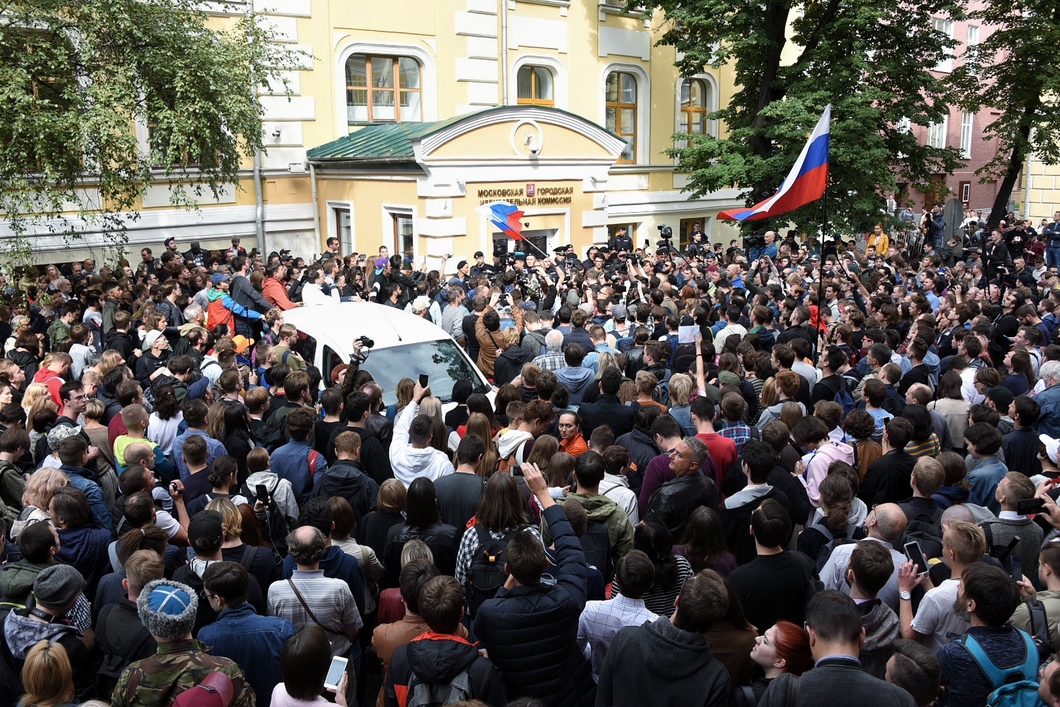
For instance, the dominant United Russia party now has an absolute majority in the Moscow city council — in 2019, during the last city council election they lost this majority, thanks to Navalny’s relentless manoeuvring. Even though opposition candidates from Navalny’s camp were not allowed to run, Navalny’s team inspired mass protests on the streets and at the ballot box: people strategically voted for candidates who were not in opposition per se, but were certain to spoil the vote share for United Russia.
|
|
|
Protest in front of the Moscow City Election Commission demanding the registration of independent candidates, 14 July 2019 / Photo: Viktoriya Odissonova, Novaya Gazeta |
|
|
Speaking of Navalny, a part of his lasting legacy in the Russian political system was the Navalny HQs which I covered in Digest #48. In 2020, representatives of these HQs, Kseniya Fadeyeva and Andrey Fateyev, managed to win two city council seats in Tomsk, shortly after Kremlin agents poisoned Navalny on a flight from the Siberian city back to Moscow. Fadeyeva was then sentenced to 9 years in prison for being a part of the Navalny HQ. She was recently freed in the momentous prisoner exchange.
|
|
Fateyev is living in exile. Last week his empty seat was handed over to a United Russia candidate, who participated in the invasion of Ukraine as a part of a paratrooper-storming regiment. |
Kseniya Fadeyeva and Andrey Fateyev meeting after the prisoner exchange, August 2024 / Photo: Andrey Fateyev’s Telegram channel |
|
|
This month's faux elections were rife with violations. The observer movement Golos registered at least 400. I covered the pressure on one of the Golos members last year. Do give it a read to get a sense of what it is like to be an election observer in Russia. |
|
|
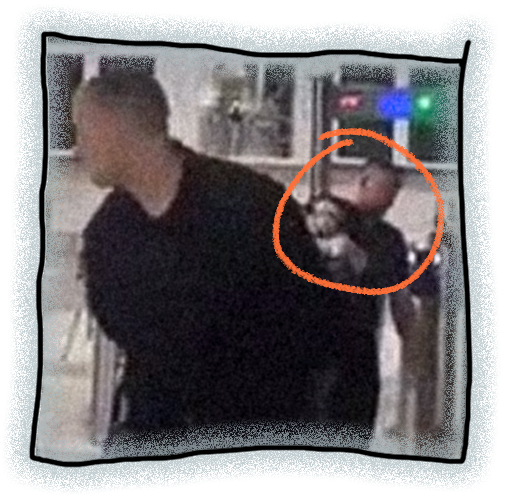
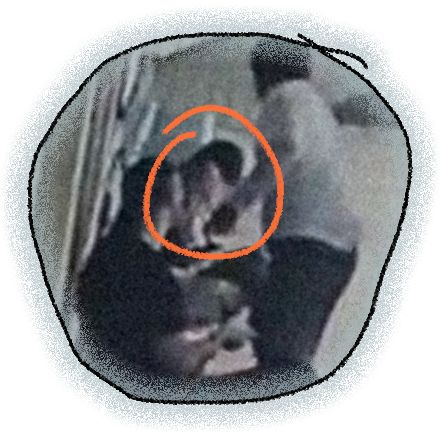
| Some highlights this year include an attack on observer Dmitry Popov, by… the security guards at the polling station. The guards first choked him and then he was apprehended by police who cited Dmitry for “hooliganism”. |
|
|
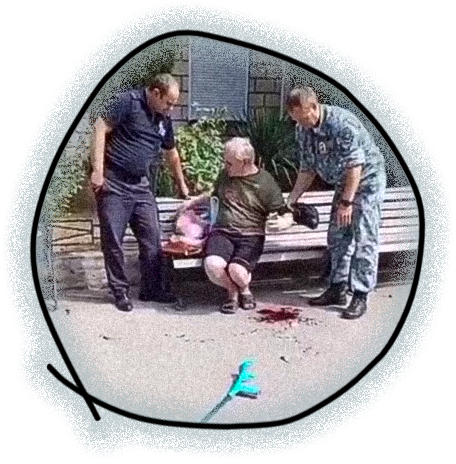
There was also an attack on a St. Petersburg electoral committee member, Aleksandr Klyukov. The head of the local municipality threw boiling water into Klyukov’s face who was then hospitalised for burns. Previously he was beaten for asking to see voting documentation, a right of every electoral committee member. |
| |
|
Also in St Petersburg, in one of the city’s municipalities the polling station was flanked by men with Wagner PMC insignia, who were apparently checking the documents of electoral committee members. |
|
|
Finally, in annexed Crimea, lawyer Vladimir Novikov cut his wrists in front of a polling station in protest against the local authorities. He was hospitalised and hasn’t been heard from since. |
| |
|
Please answer our questionnaire so we can better understand our audience! |
|
|
Sources cited in the reading list are not necessarily aligned or in a formal partnership with us. It is just what the editor finds interesting. |
|
|
The Digest is created by OVD-Info, written by Dan Storyev & Inna Bondarenko; edited by Dr Lauren McCarthy |
OVD-Info English newsletter privacy policy: how we work with your data |
|
|
|