EXPLAINING THE STRUGGLE FOR HUMAN RIGHTS IN RUSSIA |
|
|
Hello and welcome back to the Digest. |
Today we are discussing Russia’s Christmas culture war and the alleged death of one of the last members of a vanishing tribe. |
In solidarity, Dan Storyev |
|
|
Donate to OVD-Info to keep us running |
|
|
Trigger warning:
This is a newsletter about Russian repressions. Sometimes it will be hard to read. |
|
|
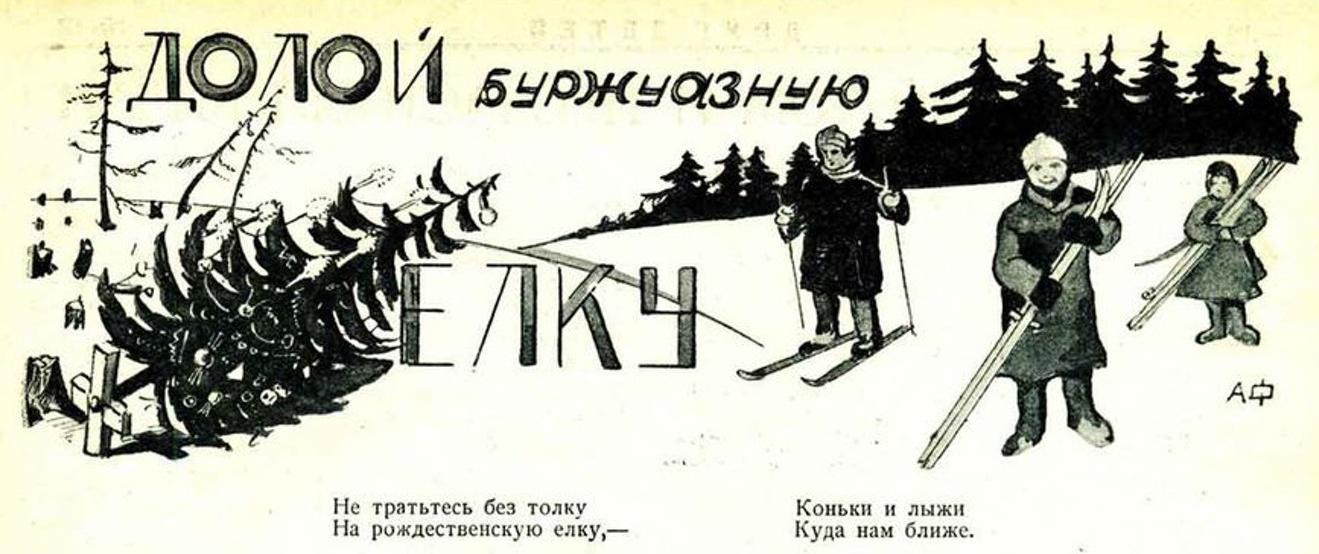
After the Bolsheviks rolled into power they waged a great culture war on all vestiges of the Tsarist culture. One of those vestiges was Christmas, a holiday much venerated in Russia. That was replaced with New Year — Novi God — celebrated on December 31st with the maximal bluster and merriment. Fireworks, stars, pine trees and Father Frost, a taller and more imposing version of Santa, came into the mix.
|
|
|
“Down with the bourgeois Christmas tree” — Soviet propaganda leaflet, 1927 / Public domain |
|
|
Now as the New Year is approaching, merriment begins — and Russia has its own version of the Christmas culture war. The Kremlin and the affiliated uncivil society organisations are very eager to wage it.
|
“The Santa brand is popular in unfriendly countries...There is a high chance [large companies] are deliberately propping up the image of Santa Claus in Russia...” this is from a demand by serial denouncer Vitaliy Borodin, who made his name proactively seeking targets for the Kremlin and demanding they be recognised as “foreign agents”. This time he wants Santa to be officially recognised as foreign agent by the Russian state.
|
Earlier, a Bryansk parliament deputy and chairman of the “Orthodox Russia” movement called on Russia to cleanse its stores of Santa merchandise — instead replacing the jolly westerner with Father Frost and his feminine helper Snegurochka, the snow princess. |
|
|
|
“Let’s cleanse [Russia] of foreign symbols together to celebrate the holidays with a real Russian soul. Time to return Father Frost to our homes and hearts! Only in this way will we be able to preserve and pass on the true values and traditions that make our people unique and strong.” |
|
|
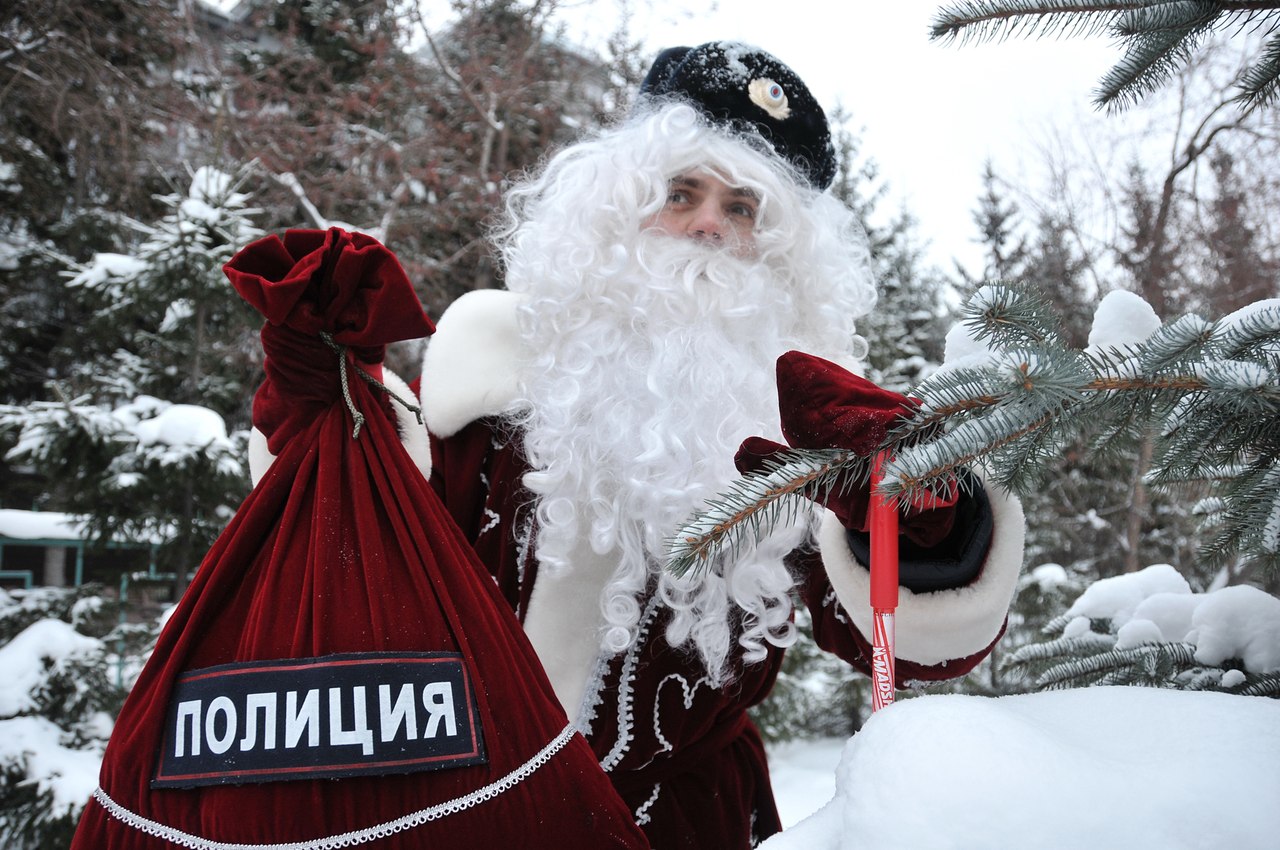
“Police Father Frost” — annual public campaign of Russia’s Ministry of Internal Affairs / Photo: mvd.ru |
|
|
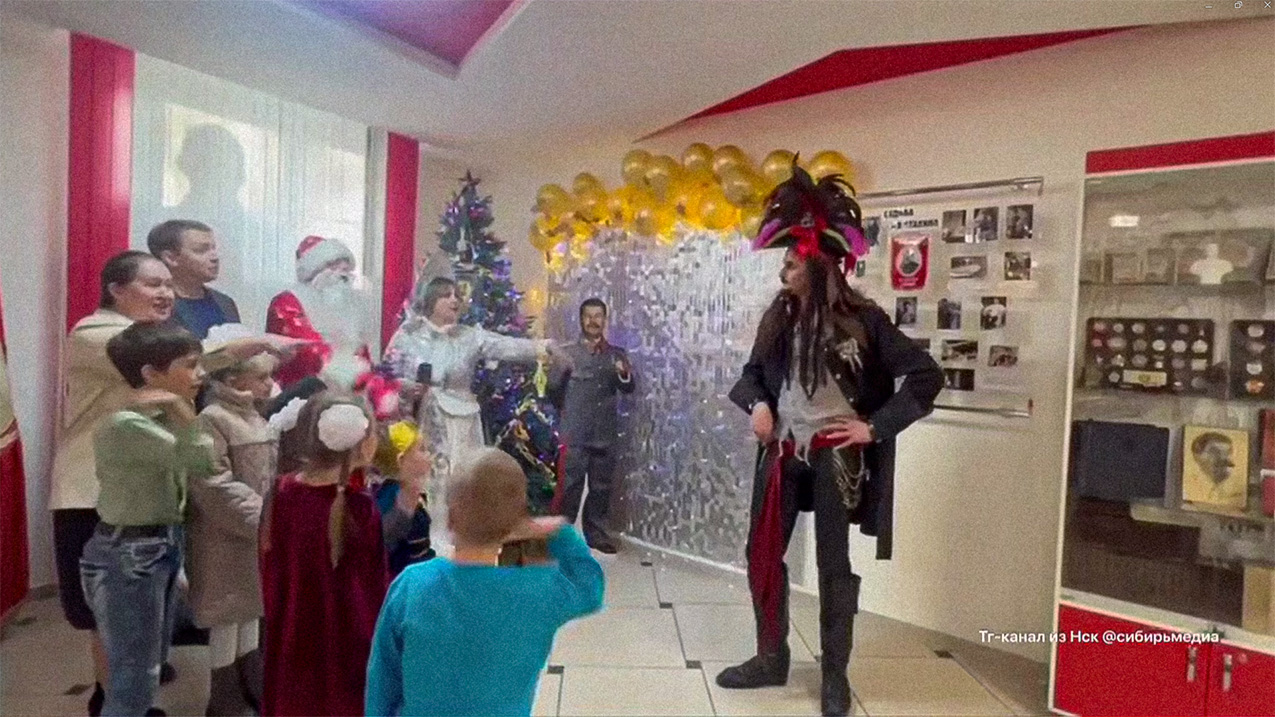
And just as in the Soviet times, the space dedicated to merriment and celebration of holidays becomes ridden with politics and attack campaigns against the enemy of the day. In the recent kids’ show set up in the “cultural-historic space” Stalin-centre this became especially apparent. Stalin-centre is a community center set up in Siberia’s Barnaul to host events, exhibitions and discussions on “of the historical heritage of the Soviet state of the leadership of the secretary of the AUCP(b)-CPSU, Generalissimo of Victory I.V. Stalin”
|
The organisers put a spin on the tradition — typically, these shows have Father Frost and Snegurochka help the bemused children defeat some sort of a campy villain, like a pirate or a robber. This time, the organisers hired a Jack Sparrow impersonator, who was branded a liberal, as the target. In the video from the event the presenter yells “Will we kick out the liberal?” The children respond with a choir of “Go away, liberal!”
|
The liberal Jack Sparrow exits.
|
|
|
The one thing that keeps me optimistic is that the culture war gimmicks are clearly not something that Russians appreciate. The aforementioned “foreign agent Santa” idea has already been met with criticism, including from Father Frost himself! Yes, Russia has an actual Father Frost institution. The Father-Frost-in-Chief is based in the Vologda region, in the town of Veliky Ustiug, and he has been played by the same actor, Andrey Balin, since 1999. Balin is no good wizard in real life, often getting in trouble with traffic police for speeding — and recently being pursued for tax fraud. In any case, the Veliky Ustiug press service responded to the Santa Claus denouncement calling it “illogical”.
|
|
|
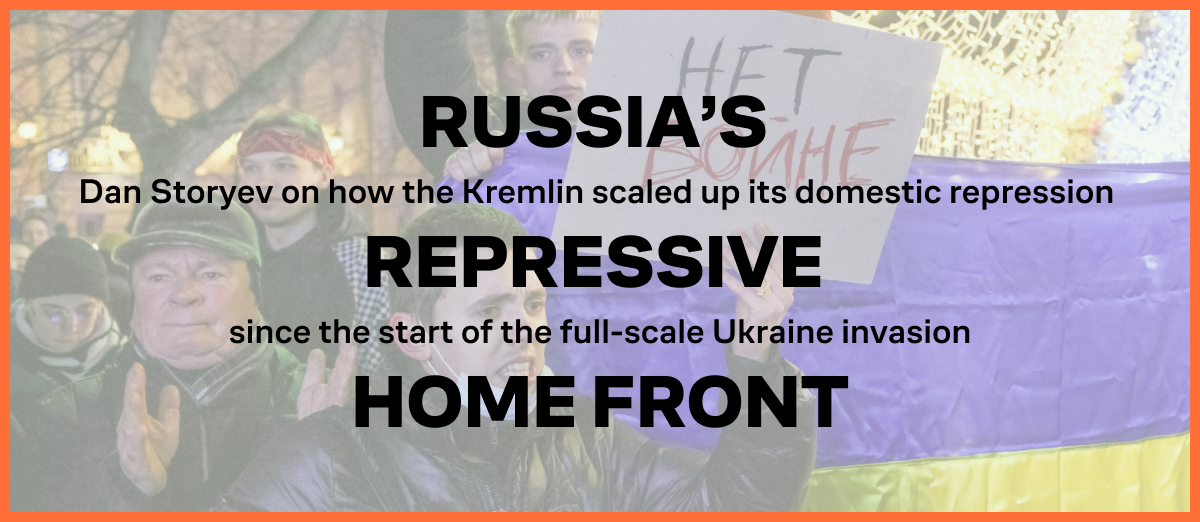
When the Kremlin unleashed its full-scale invasion of Ukraine on February 24, 2022, it also intensified its campaign of destroying civil liberties in Russia. The Kremlin has been using the invasion to mobilise the security state and clamp down on Russian civil society. |
|
|
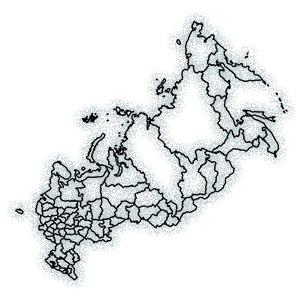
Russia, in its farthest northeastern reaches, encompasses the territory of Chukotka. It is a huge region of ice and tundra. To the east — so east that it becomes west after a certain point — Chukotka borders the USA’s Alaska. Chukotka was populated by many indigenous groups, we will discuss three. The dominant peoples of Chukotka, by the time of Russian colonisation in the 17th-18th centuries, were the Koryaks and the Chukchi. The latter were rumored to be especially warlike, mounting raids across the icy Bering strait.
|
|
|
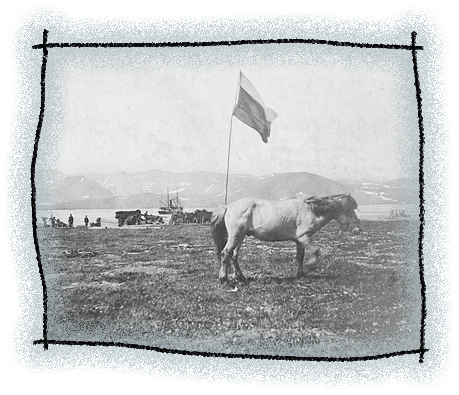
In the 18th century, the region was engulfed by war and famine. The Chukchi and Koryaks raided each other, while the Russians tried to wipe out both. Amidst this deadly chaos was a smaller group — the Kereks. The Kereks, a paleo-tungusic group with their distinct language and customs, hunted reindeer and walrus. |
| Russian national flag at a mining encampment. St. Lawrence Bay, Chukotka, circa 1906 / Photo: Beverly Bennett Dobbs, University of Washington libraries |
|
|
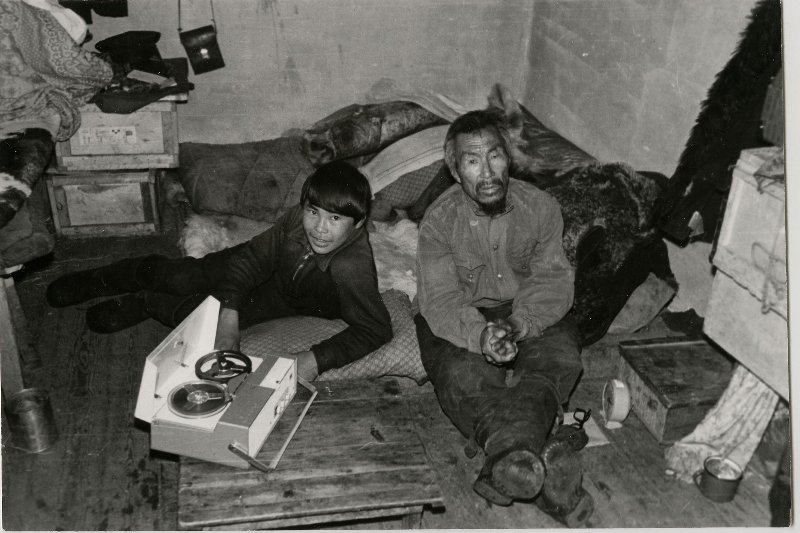
The Kereks lived in fear of slavery and murder brought by the warring groups. In the 20th century, as Chukotka was assimilated into the Soviet state, the remnants of the Kereks were assimilated by the Chukchi, who then became the official Soviet-designated “titular nation” of the region. Soviet ethnographer Vladilen Leontiev called the Kereks “the most unfortunate people in the North”.
|
|
|
Mikhail Ivanovich Yetynkeu, a Kerek, with his grandson Igor, Meynypilgyno settlement, 1974 / Photo: Magadan regional museum |
|
|
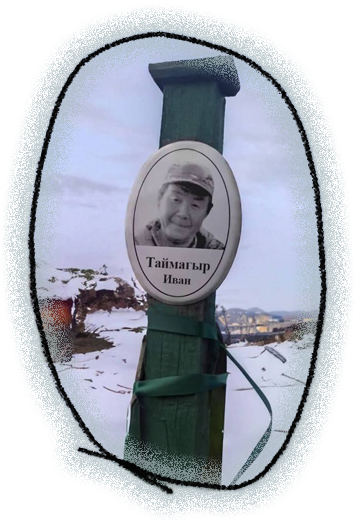
Nowadays, it is not even clear if the Kereks still exist. At the turn of the century their language was thought to be extinct — but in 2021 the all-Russia census counted 23 Kereks. Only four said they could speak Kerek. Last week, news broke that one of the last Kereks, Ivan Taymagyr, died in battle in the Kursk region. As is always the case, the truth is hidden in the fog of war — while independent and Ukrainian media report the story as true, pro-Kremlin sources deny it, claiming it to be a Ukrainian psyop. The photo that was originally supposed to be of Ivan turned out to be photoshopped.
|
| Photoshopped image of the “Ivan Taymagyr’s grave” from now deleted publication / Photo: “Voice of the SVO: the fallen and the missing” Vkontakte page |
|
|
I chose to tell the story regardless, as it illuminates an important trend in the war — that Russian ethnic minorities often lose their lives en masse. While there is little evidence of deliberate targeting of ethnic minorities for conscription, Putin presides over and encourages material conditions that are conducive to the destruction of Russia’s minorities.
|
Russia has an official designation of “Indigenous Small-numbered Peoples”, and these people tend to live in the farthest reaches of Russia, where they were driven by colonisation or where colonisation had not yet entirely destroyed them. Some rely on traditional sources of food, but these are increasingly less feasible as large Russian companies tear apart rivers and forests. They live in poverty. Since the Soviet collapse there have been no jobs and no social mobility infrastructure. Suicide rates are extremely high. A microcosm of such existence, faced by indigenous Nganasans, is laid out eerily well in journalist Yelena Kostyuchenko’s Rust, an investigation of the business practices of the industrial giant NorNikel.
|
| |
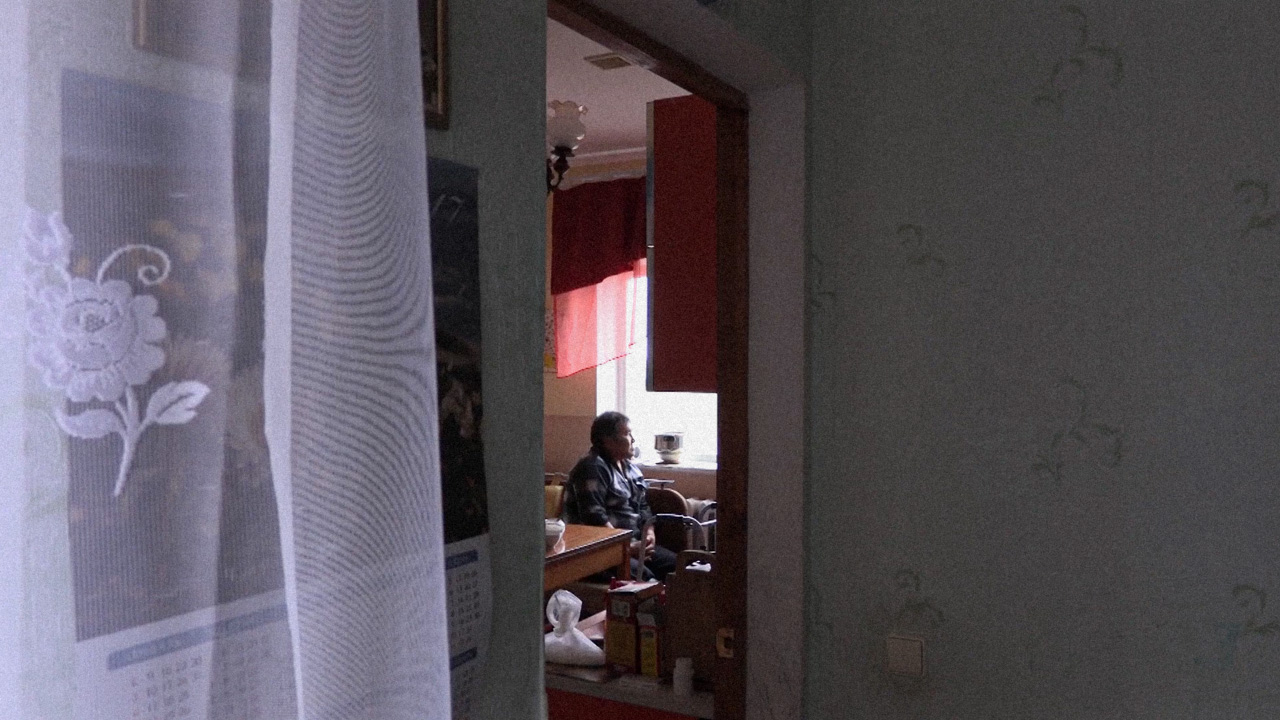
Sergei, one of the last living Kereks, Meynypilgyno settlement, Chukotka, 2017. The settlement was refurbished in 2003-2005, with old buildings torn down and new ones built by Ukrainian construction workers / Screenshot: “Land of Kereks” documentary, EthnoFilm YouTube channel |
|
|
Between poverty and gradual erosion of the natural environment, the war offers a small chance to carve out a better existence for oneself and one’s family. The contracted indigenous men receive thousands of dollars — sums they could never dare to imagine. And while dying on the battlefields in Ukraine, they greatly reduce the numbers of their peoples, as many anti-war indigenous organisations point out. The now-deleted message about the death of Ivan Taymagyr claims that he might have been “the last ever member of this tribe”.
|
|
|
Please answer our questionnaire so we can better understand our audience! |
|
|
Sources cited in the reading list are not necessarily aligned or in a formal partnership with us. It is just what the editor finds interesting. |
|
|
The Digest is created by OVD-Info, written by Dan Storyev, edited by Dr Lauren McCarthy |
OVD-Info English newsletter privacy policy: how we work with your data |
|
|
|