EXPLAINING THE STRUGGLE FOR HUMAN RIGHTS IN RUSSIA |
|
|
Hello and welcome back to the Digest. |
Today I am covering the effort to whitewash Stalinist repression and the history of a key organization in Russian independent media. |
In solidarity, Dan Storyev |
|
|
Donate to OVD-Info to keep us running |
|
|
Trigger warning:
This is a newsletter about Russian repressions. Sometimes it will be hard to read. |
|
|
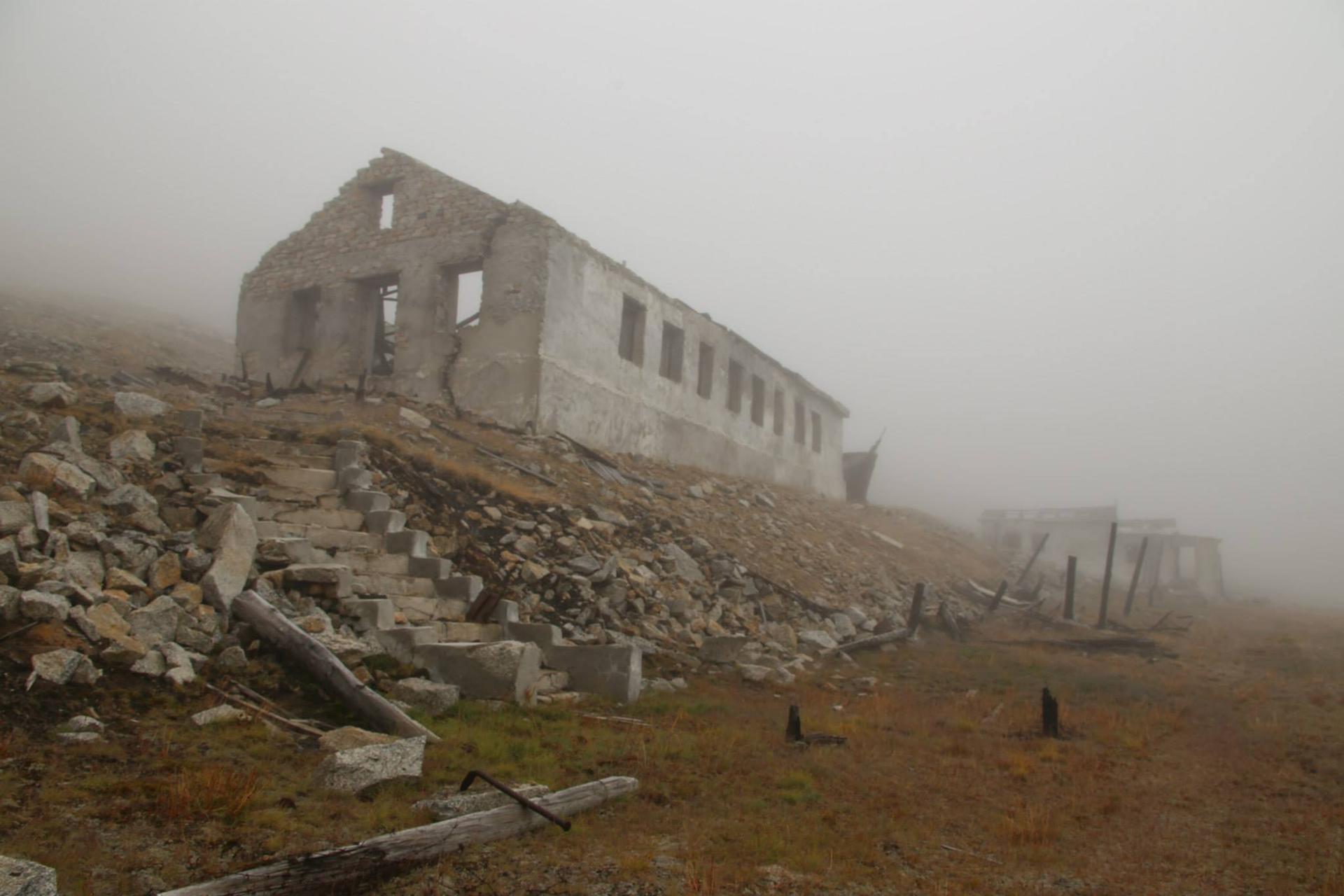
The contemporary Russian state, as the chief inheritor of the Soviet Union, is partially rooted in mass political repression. I’m talking about entire cities — like Vorkuta or Magadan — built by prisoners of Stalin’s GULAGs. The political repression during Stalin’s reign was on a truly monstrous scale, and it sometimes feels as if every Russian family has been touched by repression. I myself only recently found out that one of my great-grandfathers died in a labor camp in the Russian far north, a few time zones away from his hometown.
|
|
|
Abandoned Gulag site near Pevek, Chukotka region, Russian far north-east, 2015 / Photo: Gulag History Museum Expedition |
|
|
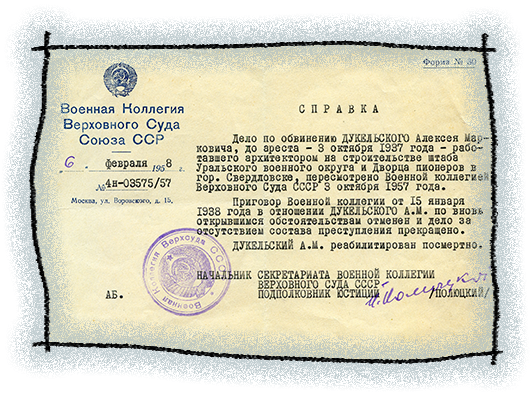
After Stalin’s death, Khrushchev launched the process of rehabilitation, attempting the process of righting some wrongs wrought by Stalin’s terror. Thousands were released from prisons, and — importantly for historical legacies — thousands were rehabilitated posthumously. This meant the world for their relatives, not just symbolically, but often the relatives of wrongfully jailed “enemies of the people” had their rights restricted and were shunned in general society.
|
|
Example of a posthumous certificate of rehabilitation “due to absence of corpus delicti” issued by the Soviet authorities, 6 February 1958 / Photo: Sergei Lisitsyn, Wikimedia Commons, CC BY-SA 4.0 |
|
|
Rehabilitation, often stalling and faltering, continued throughout the Soviet era. After the Soviet collapse, it only intensified. Just two short months before the hammer and sickle flag over the Kremlin was replaced with the Russian tricolor, on 16 October 1991, the Russian Federation issued a sweeping law on rehabilitation. Since then Russia has rehabilitated over 3 million people. |
|
|
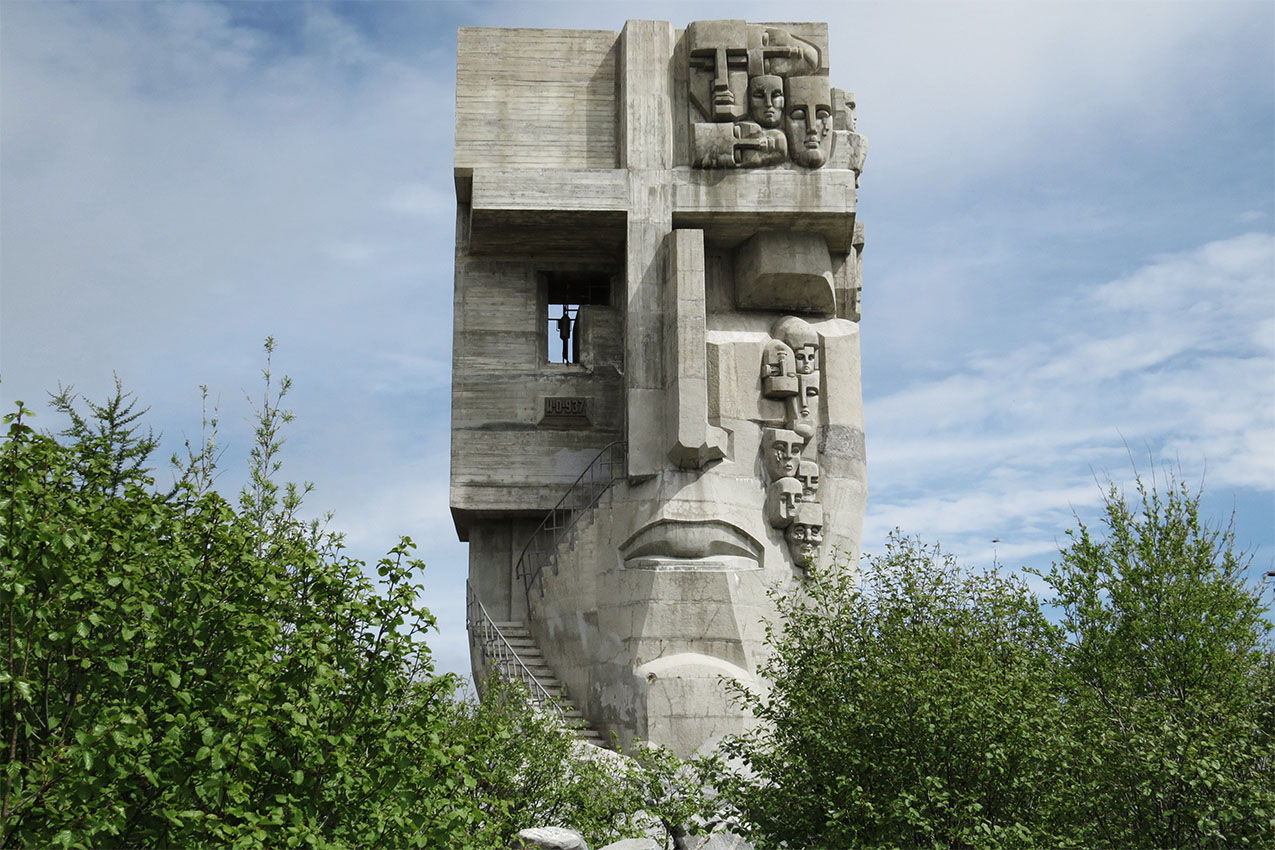
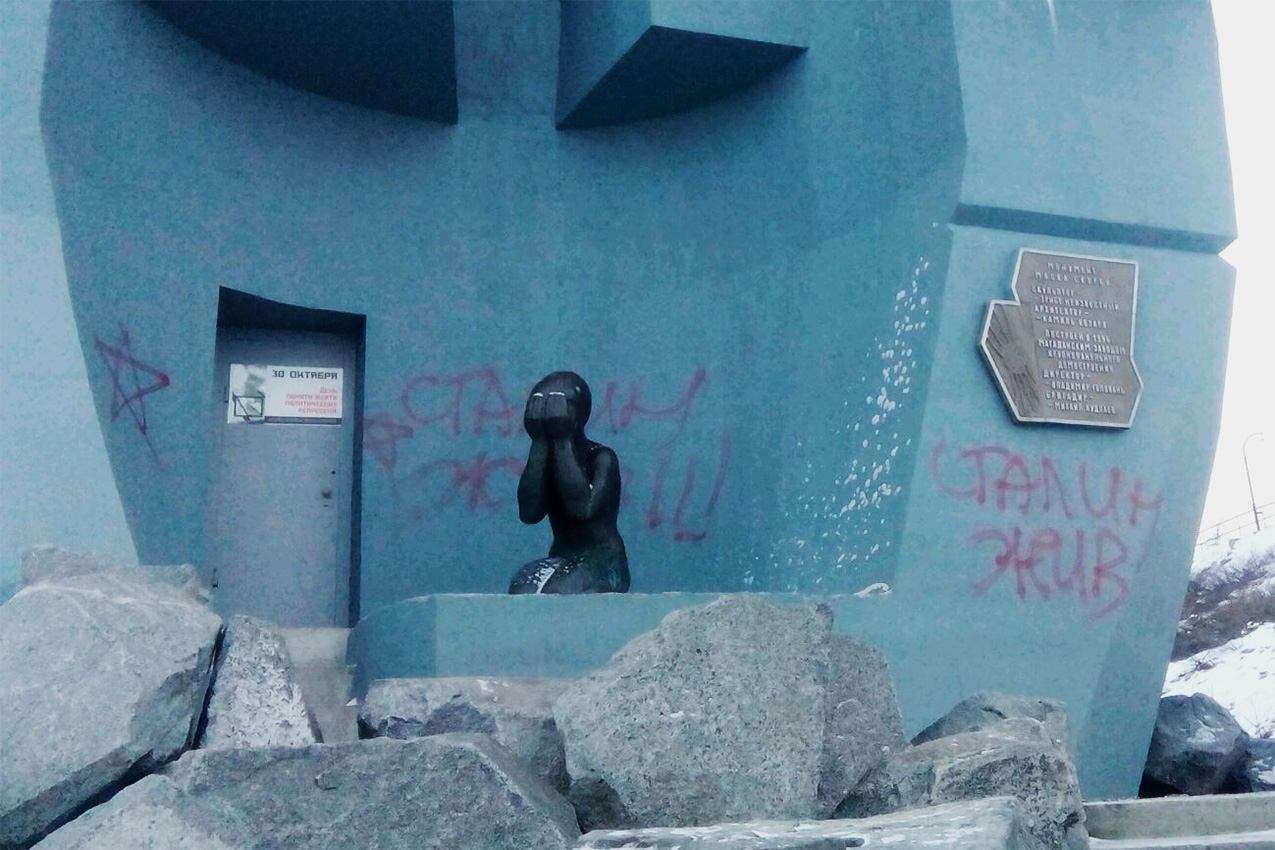
The “Mask of Sorrow” monument commemorating prisoners of the Gulag system, Magadan, Russian Far-east. It was installed in 1996 with funding partially provided by both federal and local authorities / Photo: Polina Boytsova, Wikimedia Commons, CC BY-SA 4.0 |
|
|
Yet rehabilitation, as a vestige of aspirations for democracy and justice, seemingly didn’t sit well with Putin’s system which is dominated by the direct heirs of the Soviet secret police, with Putin famously being a former spy.
|
Last week, Russia’s Prosecutor General’s office released a draft of legislation to revoke some of the rehabilitations. In doing so it follows the Kremlin’s propaganda which has been slowly sowing doubt and mistrust in the rehabilitation process and trying to justify Stalin’s repression. It also follows the new Kremlin white paper on the memory of repression, adopted three months ago. In the new policy concept, the language deliberately avoids naming the perpetrators or who was impacted by them — however, the document dedicates space to highlighting the importance of “defending society from destructive info-psychological influence” and “defense of traditional values”.
|
|
|
In 2016, the Mask of Sorrow monument in Magadan was vandalised with the words “Stalin Lives!” / Photo: @Kurnaeva_tanya, Twitter |
|
|
Experts from the human rights watchdog Memorial agree that the legislation, if enacted, will deal a massive blow to the rehabilitation process. Purportedly, it is meant to target rehabilitated people who participated in war crimes or crimes against humanity, but it is likely to be used to sow further distrust towards rehabilitation and strengthen the Kremlin’s Stalinophilic narrative — and importantly, it would mean that many of the political prisoners’ cases still in FSB archives would be sealed away and censored, as only rehabilitated cases are open to the public. This development is quite worrying in the context of the Kremlin’s continuous attempts to rewrite history in favor of authoritarianism, statism and imperialism — all embodied by a whitewashed Stalin.
|
|
|
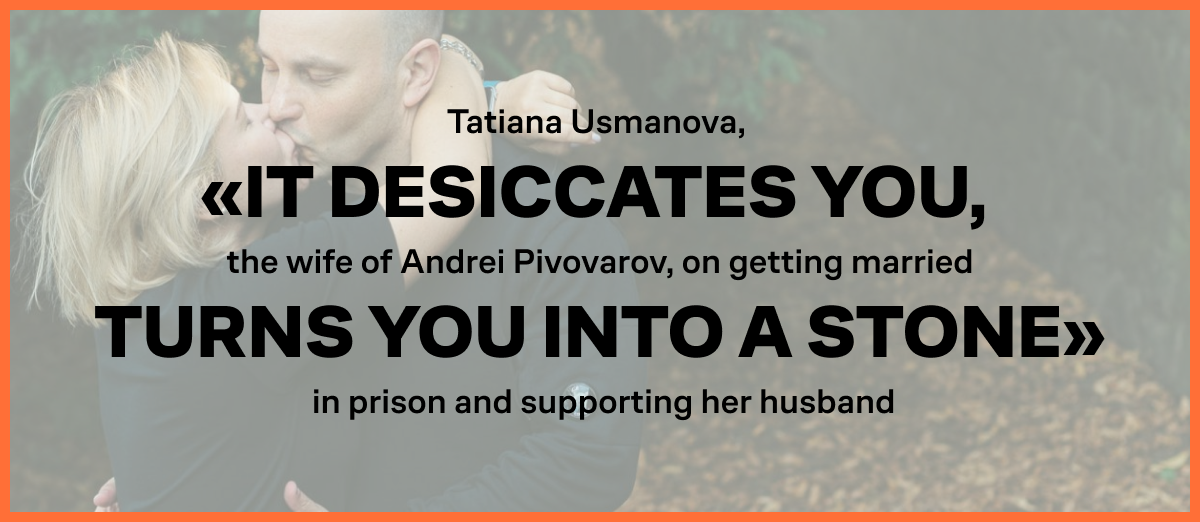
An interview with Tatiana Usmanova about how she accomplished a wedding in a penal colony, defied the stereotypes of, and expectations from, the wife of a political prisoner, and overcame the uncertainty of not knowing whether her loved one will be set free on time. You can find our conversation with Tatiana’s husband, politician Andrei Pivovarov, recently set free as part of a prisoner exchange between Russia and the West, here.
|
|
|
In our readings section you have often seen articles from Mediazona. Mediazona is one of the publications that has defined Russia’s independent media landscape this decade.
|
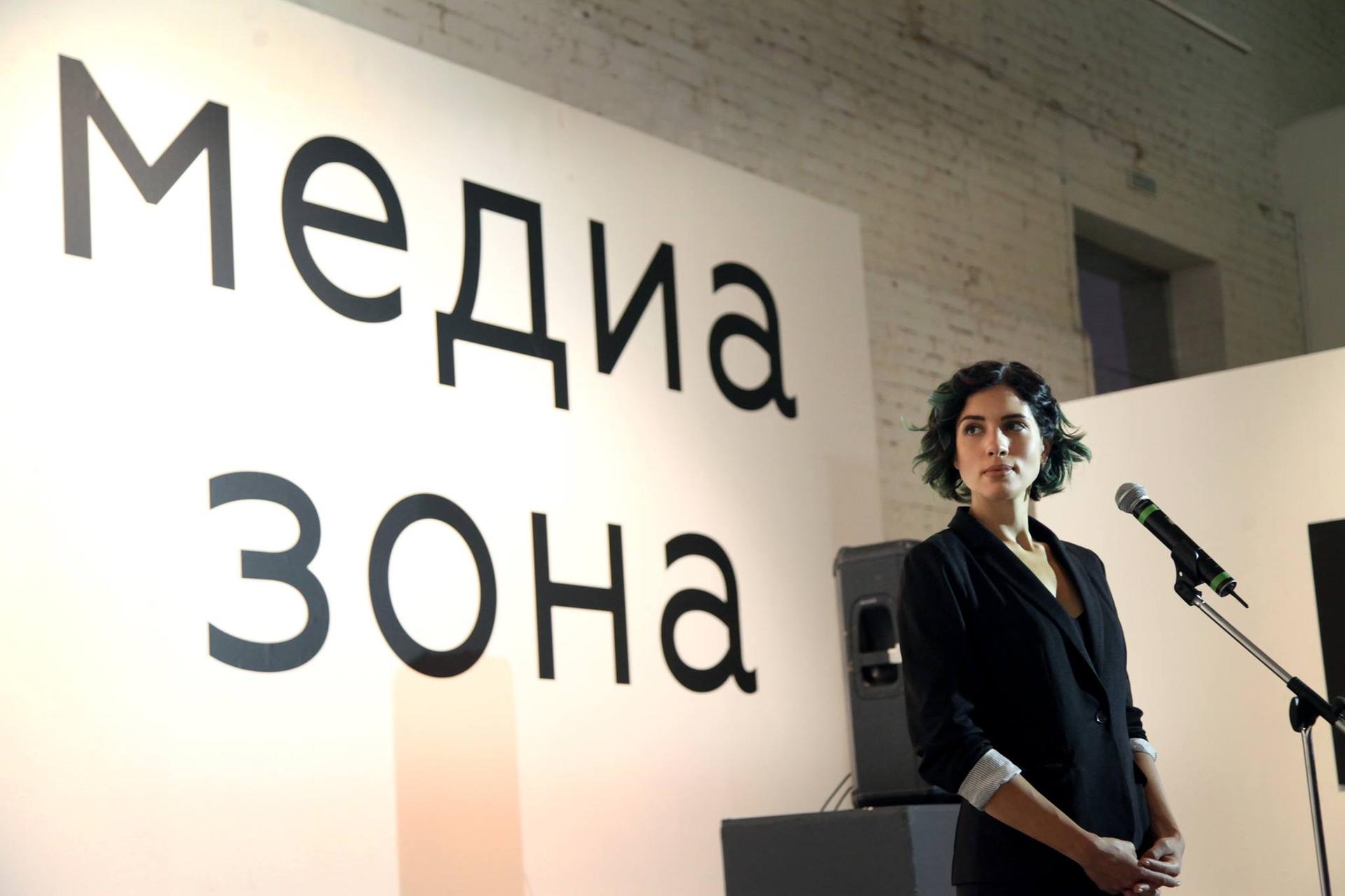
Mediazona is, in a way, both a product of the epoch of extreme Putinism, and a reaction to it. The publication was founded shortly after the annexation of Crimea in 2014. And its founders were members of the infamous Pussy Riot collective — the jailings of their members Nadezhda Tolokonnikova and Maria Alekhina in 2012 were an early sign of the heightened attack on freedom of speech by the Kremlin. |
|
|
Nadezhda Tolokonnikova at the Mediazona launch presentation in Moscow, 9 September 2014 / Photo: Nadezhda Tolokonnikova’s Facebook page |
|
|
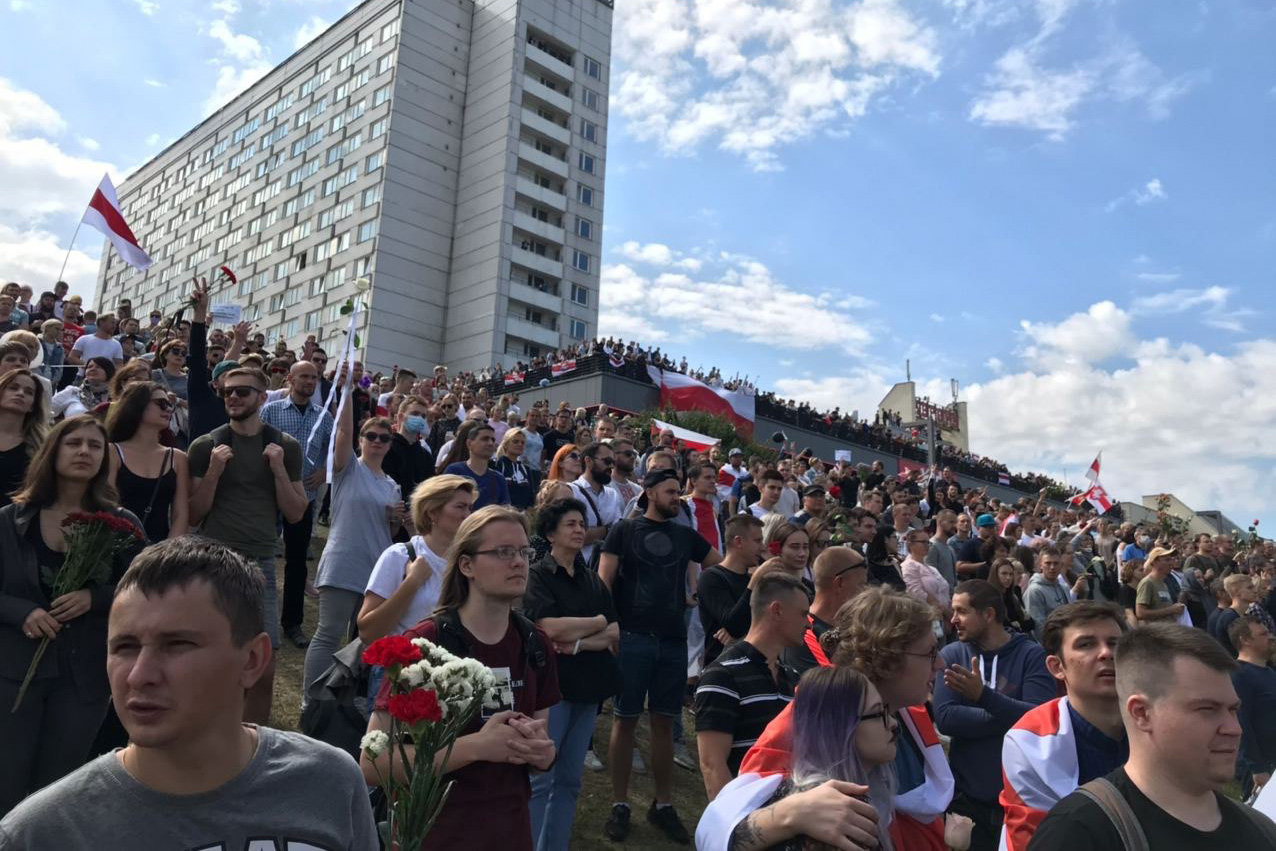
From its start, Mediazona has focused on covering Russia through the lens of its penitentiary system, a focus it continues today, still employing court reporters even in the atmosphere of heightened repression to deliver all-important news from courtrooms throughout the country. They have also successfully provided in-depth coverage of protests in Russia, Belarus and Kazakhstan — I especially recall relying on their reporting during my own trip to Belarus during the 2020 protests as a journalist.
|
|
|
People protesting in Minsk, Belarus, 15 August 2020. In 2020, Belarus witnessed the largest protests in its history against President Alexander Lukashenko and his government after disputed elections and reports of electoral fraud / Photo: Mediazona |
|
|
These days, Mediazona is instrumental for the global community’s understanding of the Kremlin’s crimes in Ukraine — its collaborative project counting Russian soldiers killed in the war is a feat of data gathering and a valuable source for researchers, journalists and activists.
|
Mediazona has grown into a pillar of Russia’s independent media in just over a decade. But now, it needs your help to keep standing. The Kremlin has slammed the door on many of the ways for donors to help independent media, destroying virtually all sources of revenue in Russia. Which is why Mediazona is now asking for your support so that they can continue their vital work. You can read more here.
|
|
|
Please answer our questionnaire so we can better understand our audience! |
|
|
Sources cited in the reading list are not necessarily aligned or in a formal partnership with us. It is just what the editor finds interesting. |
|
|
The Digest is created by OVD-Info, written by Dan Storyev & Inna Bondarenko; edited by Dr Lauren McCarthy |
OVD-Info English newsletter privacy policy: how we work with your data |
|
|
|