EXPLAINING THE STRUGGLE FOR HUMAN RIGHTS IN RUSSIA |
|
|
First, happy assorted holidays to you all! Now, some housekeeping — we will all be taking a holiday break into the second week of January, so there will be a lapse in the Digests. See you all in 2025! |
Today I wanted to write up my personal summary for this year. |
In solidarity, Dan Storyev |
|
|
We have a holiday gift for students! |
|
|
Trigger warning:
This is a newsletter about Russian repressions. Sometimes it will be hard to read. |
|
|
This was a tough year for all of us in Russian civil society. Protest, death, jail, but above all — a glimmer of hope. I want to highlight some of the key happenings, in no particular order.
|
|
|
1,000 is a huge number, it can be hard to visualise. Think of a concert or 10 double-decker buses. And think of specific people who I have covered in the digest.
|
|
|
I, in particular, think of Nadezhda Buyanova — a career pediatrician who was libeled by her patient without any proof. The elderly woman got locked up for “spreading fakes about the military” for five and a half years. |
| Nadezhda Buyanova in court, 12 November 2024 / Photo: OVD-Info |
|
|
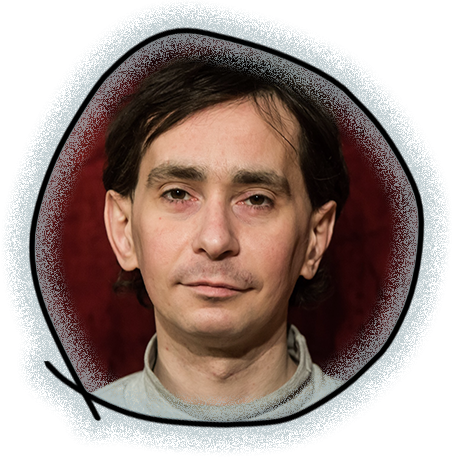
I also think of those politically persecuted who have perished under the repression. Those like Pavel Kushnir — a young poet and virtuoso pianist who was imprisoned for a principled anti-war stance. He died during a hunger strike.
|
| Pavel Kushnir / Photo: Facebook |
|
|
If you would like to write a letter to politically persecuted prisoners, please do. Letters are vital to keep sanity and hope alive. |
|
|
Something that stood out to me in 2024 is the queer repression. The Kremlin’s framing of queer Russians as the key enemy within started over a decade ago.
|
Over the years they have gradually eroded the inalienable rights of queer people and strengthened repression. It more or less started with the “gay propaganda” law of 2012, designed to push queer content out of the media. I suggest reading our deep dive on Carnegie where you will learn how western conservatives also influenced the Kremlin’s anti-queer drive.
|
|
|
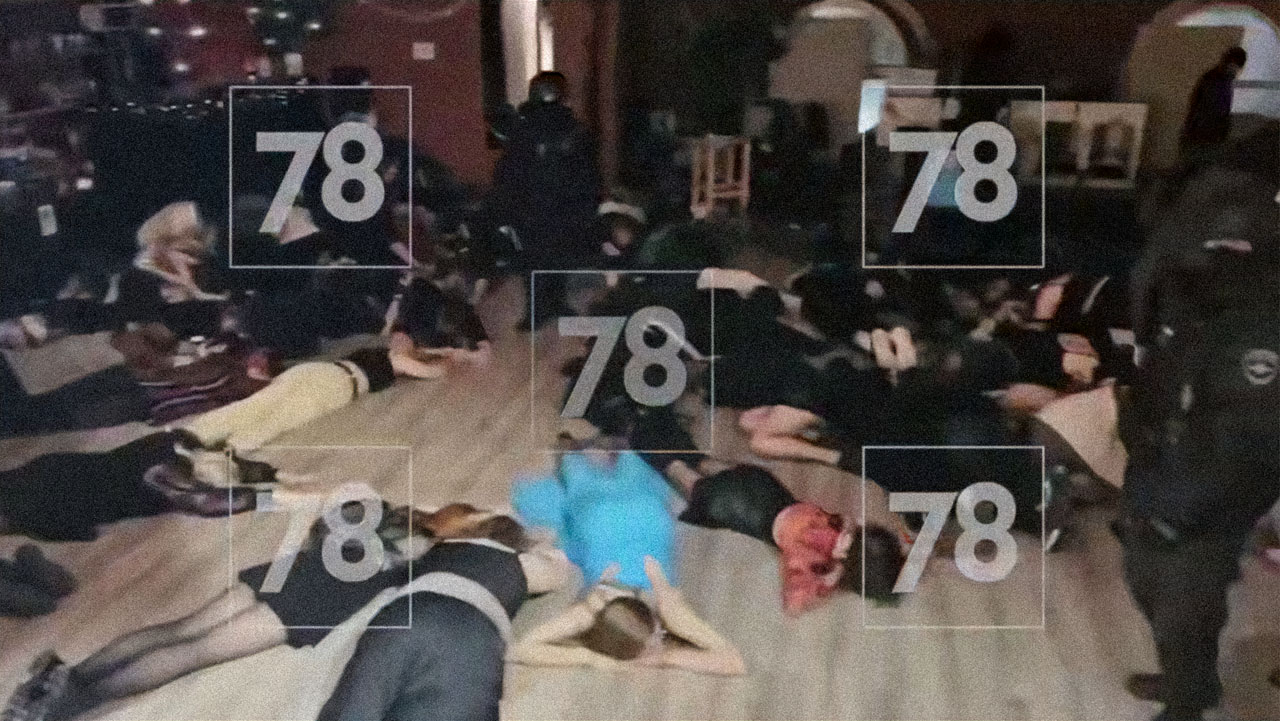
Police raid at a private LGBTQ+ party at the “Yavleniye” space in St. Petersburg, 7 December 2024. Police detained 19 people and confiscated queer literature / Screenshot: 78 news channel |
|
|
This March, the Kremlin declared the non-existent “international LGBT movement” an “extremist organisation”. This is a part of the tactic of coming up with arbitrary designations in order to legally target an enemy du jour. The extremism marker led to brutal raids on safe queer spaces like bars and drag shows. Add to that absurd cases like persecution based on rainbow-colored earrings.
|
|
|
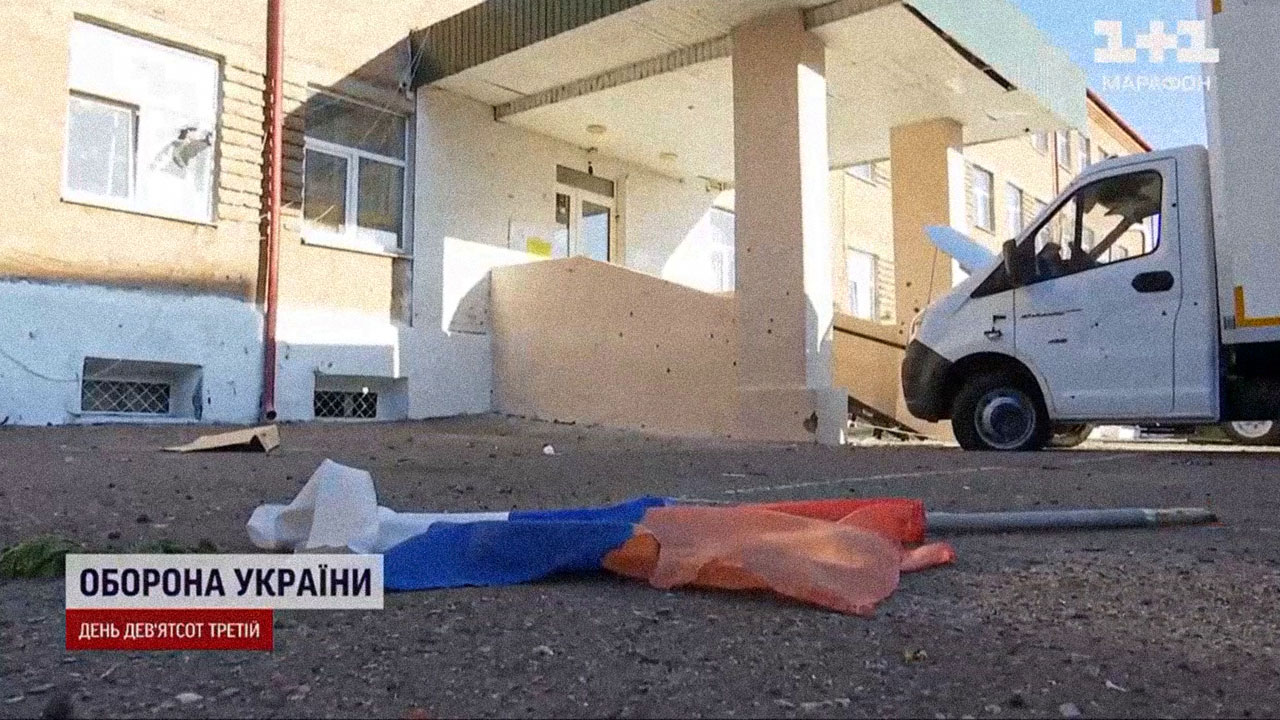
The war has been going since 2022, but 2024 stood out to me for the visible erosion of security in Russia. |
|
|
A Russian flag removed by Ukrainian soldiers at a school in Sudzha, Kursk region. 14 August 2024 / Screenshot: TSN video |
|
|
Ukrainian bomb and drone attacks on Russian cities became normalised — in the border town of Belgorod the attacks are almost a daily occurrence. Russian territory was invaded by a foreign military for the first time since the Second World War. |
|
|
And, lastly, a horrifying terror attack in Moscow’s Crocus City Hall revealed the devastatingly slow response and lack of competence (which was compensated for with brutality) on the part of the Russian security services. |
| Moscow’s Crocus City Hall on fire, 22 March 2024 / Photo: SOTA |
|
|
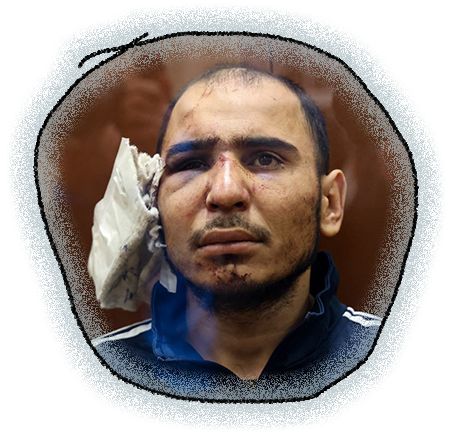
The Kremlin’s response to Crocus especially stood out to me. The supposed perpetrators were proudly tortured on camera. And, since the accused were Tajik, a mass campaign of deportations and discrimination against Tajiks followed. Cops and “concerned citizens”, of course, made little distinction and other Central Asians faced similar troubles. The racialised anti-migrant drive in Russia is ongoing, egged on by rhetoric from the security services, politicians and “uncivil society” groups.
|
| Saidakrami Muradali Rachabalizoda, one of the suspects in Crocus terror attack, in Basmanny court, Moscow, 24 March 2024 / Photo: SOTA |
The racialised anti-migrant drive in Russia is ongoing, egged on by rhetoric from the security services, politicians and “uncivil society” groups. |
|
|
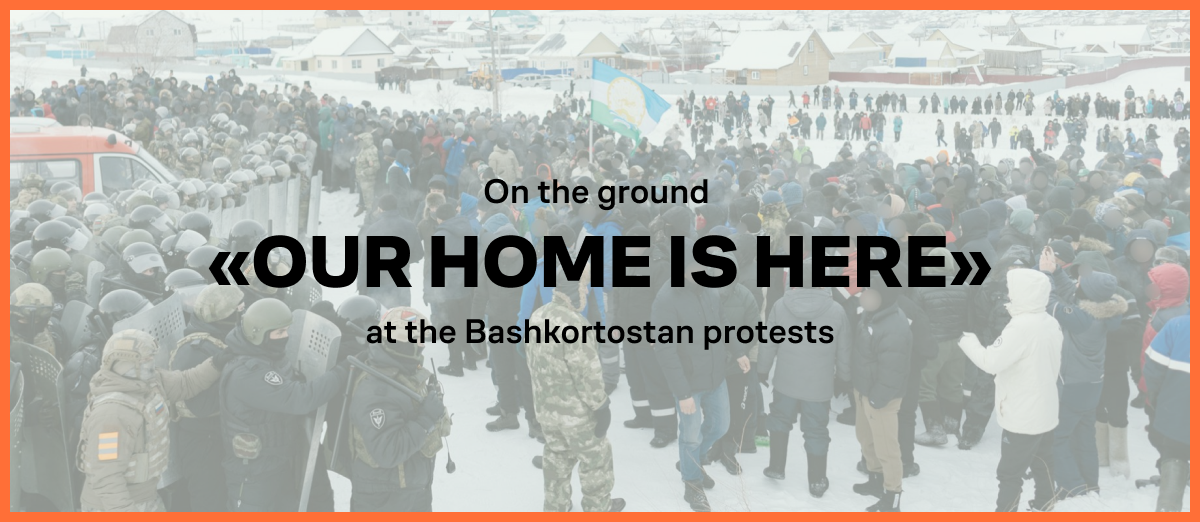
Russians throughout the country are repressed, brutalised and pushed into exile. However, what is important to note is that Russians resisted — and continue to resist. The most prominent here were the Baymak protests. Russia’s remote region of Bashkortostan erupted in protest after the detention and sentencing of an indigenous eco-activist. Thousands showed up on the snowy streets of Baymak, a city where activist Fayil Alsynov was being held.
|
|
|
Baymak protests, Bashkortostan, 17 January / Photo: OVD-Info |
|
|
The protest is remarkable, especially in wartime Russia, where the Kremlin has done its utmost to diminish the possibility of street protest. I am proud to say that OVD-Info was the only outlet to cover the protests on the ground in English. Read the full story (1, 2) on our website — a short recap here won’t do it justice.
|
|
|
OVD-Info on the ground at Bashkortostan protests
|
|
|
Lastly, there was the murder of Alexei Navalny in a remote frozen prison. It is impossible to overstate how much of a shock this was for all of us. I, like many, grew up with Navalny’s image. I personally never liked his politics too much but that didn’t matter — Navalny was a symbol of unyielding resistance to the Kremlin’s machine, persisting for years on end.
|
|
|
Navalny’s bravery cemented his status as the ultimate symbol of Russian opposition. He returned to Moscow after being poisoned by Putin’s agents, knowing that he would be jailed. And he was. While in prison he kept hope alive, through his ever-humorous and lively notes. I recommend his posthumous memoir, Patriot, to everyone wanting to understand contemporary Russia.
|
| One of many makeshift memorials to Alexei Navalny / Photo: Dasha Trofimova, Meduza |
|
|
Navalny’s murder provoked something unseen in Russia since 2022 — mass demonstrations in Moscow. Those who were there reported, paradoxically, an overwhelming sense of hope. Even though Navalny was dead, the chants showed the continuing belief in a free Russia, democracy, and Navalny’s legacy. For a brief moment it seemed that people owned the streets once again. Navalny’s grave then became a beacon. People from all over Russia came to lay flowers there — and they continue to come.
|
|
|
Crowd gathered in front of the Borisovskoye сemetery during Alexei Navalny’s funeral, 1 March 2024 / Photo: Dasha Trofimova, Meduza
|
|
|
Later, it was uncovered that Navalny was considered for a prisoner swap — yet the Kremlin was set on killing him. Thanks to the joint efforts of exile groups and Western diplomats, some other political prisoners were released. Amongst them are top opposition politicians like Ilya Yashin and Vladimir Kara-Murza. I hope that now, in exile but free, they will carry on Navalny’s legacy.
|
|
|
Donate to OVD-Info to keep us running |
|
|
Sources cited in the reading list are not necessarily aligned or in a formal partnership with us. It is just what the editor finds interesting. |
|
|
The Digest is created by OVD-Info, written by Dan Storyev, edited by Dr Lauren McCarthy |
OVD-Info English newsletter privacy policy: how we work with your data |
|
|
|