EXPLAINING THE STRUGGLE FOR HUMAN RIGHTS IN RUSSIA |
|
|
Hello, Dissident Digest readers! |
I’m Inna, stepping in for Dan once again.
Today, we’re talking about two key numbers from last week: 30 and 70. A $30 donation that has led to extremism charges, and a 70-year-old woman who spoke out against the war and was sentenced to 1.5 years of probation. |
In solidarity,
Inna Bondarenko |
|
|
Trigger warning:
This is a newsletter about Russian repressions. Sometimes it will be hard to read. |
|
|
When a $30 donation becomes extremism |
|
|
How would you define extremism? There is no universal answer under international law. While in democracies it usually means ‘violent’ extremism with specific criteria, Russia’s definition is much broader. It includes a wide range of ideologies, non-violent actions, and affiliations with certain social groups. The broad scope of Russian “anti-extremist” legislation has drawn a lot of criticism from experts around the world — and it’s easy to see why.
|
In Russia, extremism is defined in a pretty sweeping way. According to the Criminal Code, anything done out of political, ideological, racial, national, or religious hatred, or against any social group, can be considered extremist. Due to this broad definition, it is (extremely) easy to be labelled extremist in Russia. For instance, people and groups linked to Alexey Navalny, even after his death in a Russian Arctic prison, are still being targeted. They are being prosecuted for ties to Navalny’s organizations, especially the Anti-Corruption Foundation (ACF) — even for small donations. But why was ACF designated extremist in the first place? According to the Moscow City Court’s ruling, its members were accused of inciting illegal protests, and attempting to overthrow the constitutional order.
|
|
|
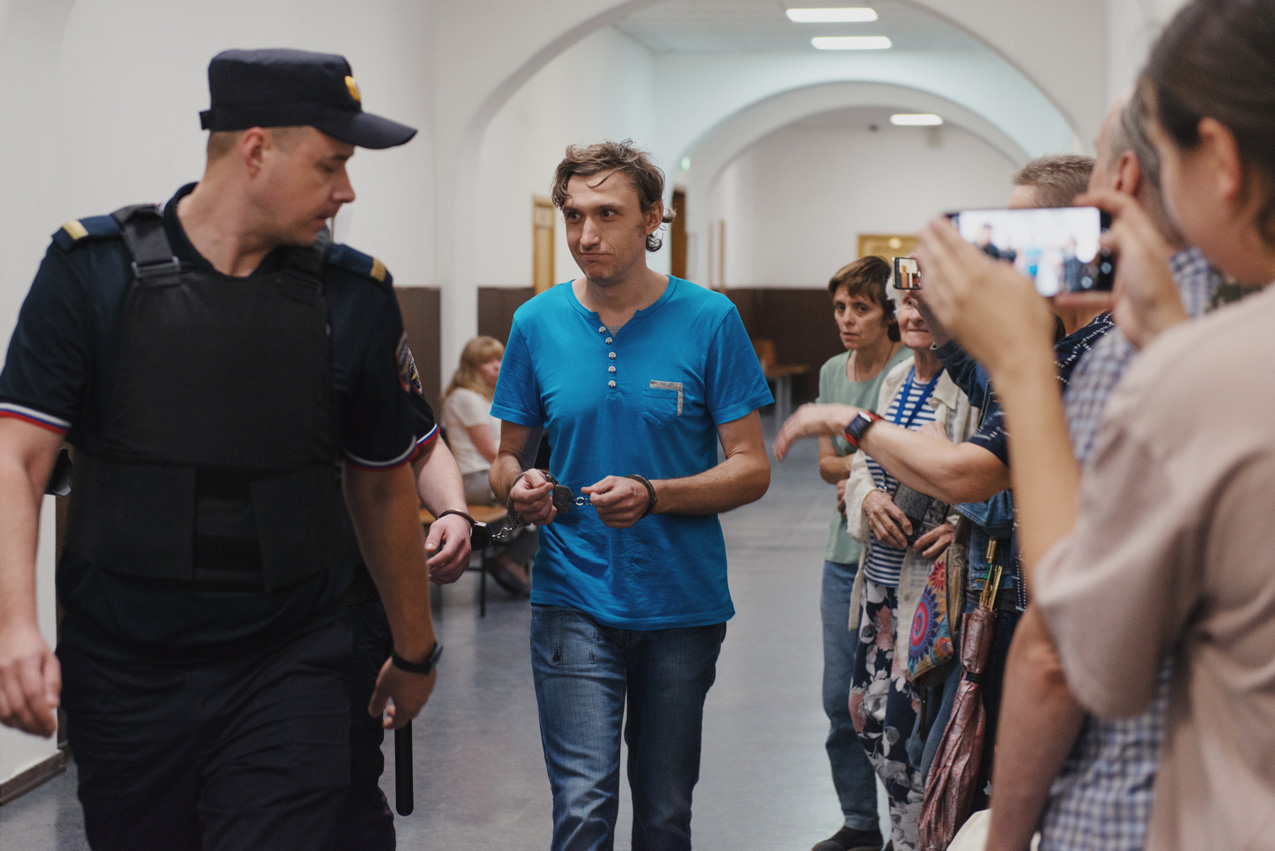
Konstantin Kotov in Basmanny district court, Moscow, 22 August 2024 / Photo: Varvara Gataullina |
|
|
Just last week, activist Konstantin Kotov, who was convicted for participating in numerous “unsanctioned” peaceful rallies in the “Moscow Case” (a criminal investigation into clashes with police at the 2019 “For Fair Elections” protest) and Viktor Levakov, a volunteer at Nemtsov Bridge (a makeshift memorial on the bridge where opposition politician Boris Nemtsov was assassinated), were put under house arrest until 19 October.
|
| Viktor Levakov in Basmanny district court, Moscow, 22 August 2024 / Photo: Varvara Gataullina |
|
|
They’re facing charges for donations they made to ACF. Kotov is accused of donating 3,000 rubles (around $30), and Levakov — 3,500 rubles. Their court hearings were closed to the public because the law allows it when defendants are charged with extremism. |
|
|
Since ACF was labeled extremist in 2021, many people have faced charges for being part of or supporting the group. The crackdown ramped up in 2023, with arrests of Navalny’s lawyers, ACF donors, and people with even a loose connection to ACF. Take SotaVision journalist Antonina Favorskaya, who was only involved in reporting on Navalny's trials and memorials – now being held in custody.
|
| Antonina Favorskaya in Basmanny district court, Moscow, 21 August 2024 / Photo: SOTAvision |
|
|
“The ACF case is as crucial as the Yukos case was back in the 2000s, [when the Kremlin went after oligarchs from Yukos Oil Company, including its founder Mikhail Khodorkovsky, and seized control of their major assets]. Just like Yukos, it has the potential to spark many new cases for years to come. This is especially likely given that Navalny’s death hasn’t halted the legal proceedings. The case’s impact could be profound,” said a human rights advocate familiar with the ACF case, in an interview with Holod media outlet.
|
|
|
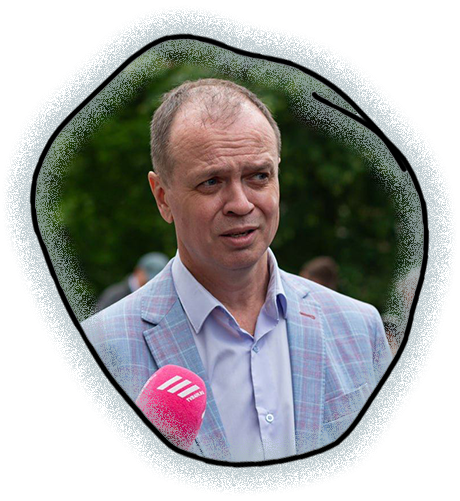
Ivan Pavlov / Photo: SOTA |
|
According to lawyer and human rights defender Ivan Pavlov, the authorities’ aim is to instill fear. “They don’t need to imprison a large number of people to achieve this. It’s sufficient to convict a few high-profile individuals. Independent media will ensure that this information reaches the intended audience, creating a chilling effect similar to that of widespread repression,” Pavlov explained to Holod. |
|
|
As supporting Russian civil society from inside Russia has become riskier, donating to groups like OVD-Info from abroad is more important than ever. We appreciate monthly donations because they help us plan our work better, but even small contributions make a difference. |
We asked our donors in Russia why they support OVD-Info and here’s what they shared: |
— I believe even the smallest contribution can make a big difference. A tiny donation can change someone’s life. And when you see how these small contributions add up to something big, it’s clear we’re making an impact. |
— Your organization helps me remain human and reminds me that I’m not alone [in this struggle]. It’s comforting to know there are still people out there who hold onto honor, dignity, and decency. |
— Everything feels pointless right now. But it’s exactly in times like these that we need to keep supporting those who will be there when things finally change. |
— Helping even one person, or just trying to, makes it all worthwhile. Like in “One Flew Over the Cuckoo’s Nest” — “at least I tried.” No one said it would be easy or fast, but every attempt to help is a step towards a future where democracy and the rule of law matter. |
If you find our work important, welcome aboard — join us in supporting people caught up in Russia’s ruthless repressive system. You keep us going and support people unjustly prosecuted by Kremlin. |
|
|
Donate to OVD-Info to keep us running | |
|
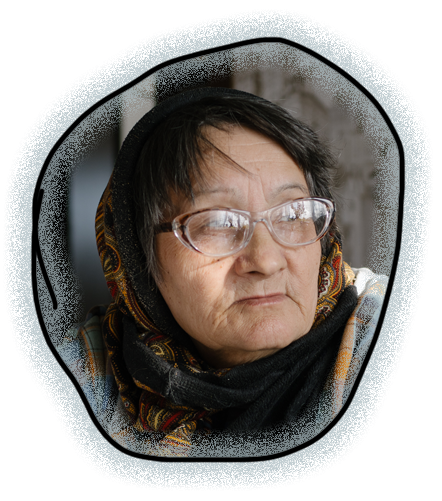
Anastasia Gordienko: sentenced for 2 social media posts |
|
|
On August 28th, Anastasia Gordienko, a 70-year-old from a remote village in Siberia, was handed a 1.5-year probationary sentence for speaking out online against the war in Ukraine. On top of the 1.5-year sentence, Gordienko was banned from running websites for 3 years.
|
Earlier in June, we shared the story of the Gordienko family. Sergei and Anastasia Gordienko live in the Odessa district of the Siberian Omsk region, in an abandoned village that’s not even marked on maps. Surrounded by ethnically Ukrainian villages, the Gordienkos have become outcasts not only because of their remote location but also due to their anti-war beliefs and the criminal cases filed against them. In that feature article, we also explored why ethnic Ukrainians from the surrounding villages volunteer to fight for the Kremlin against Ukraine.
|
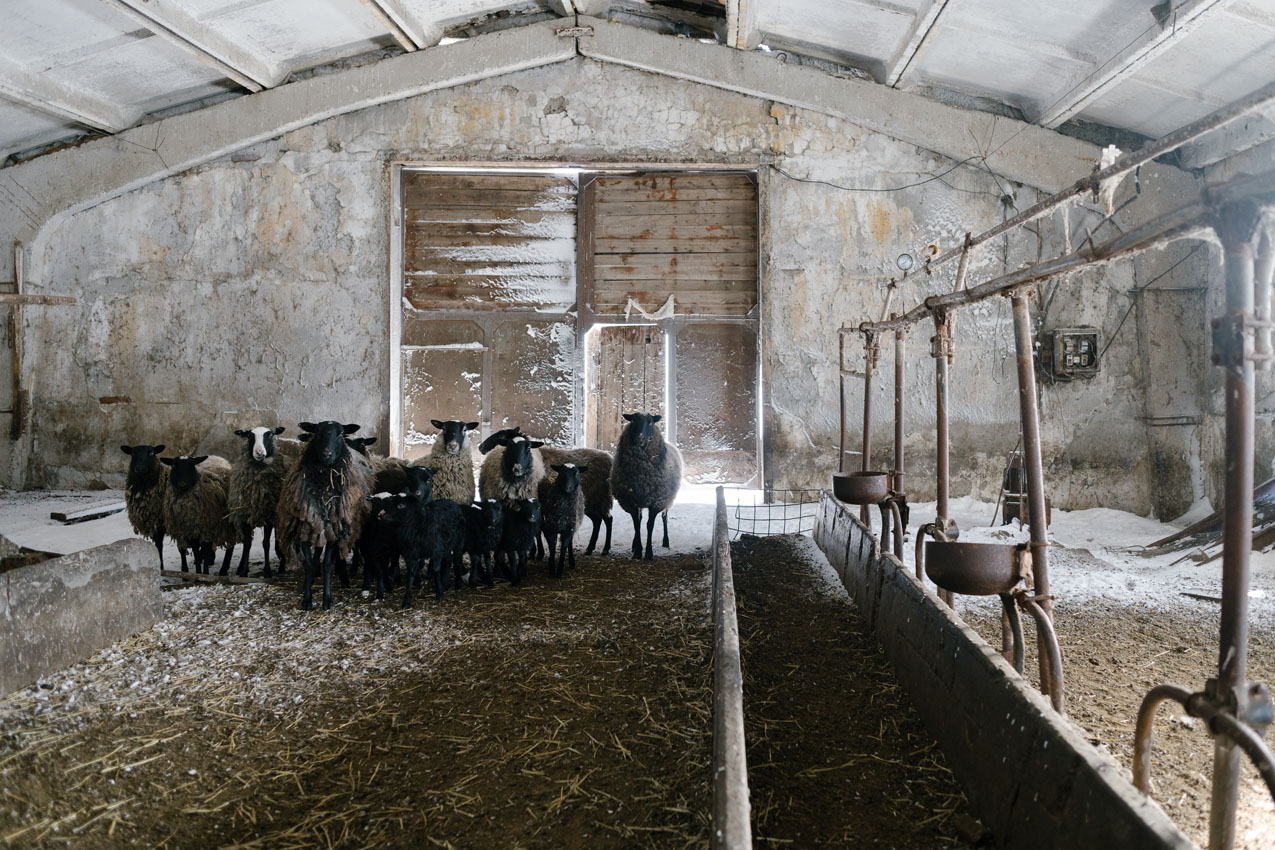
For years, the Gordienko farm was known for its amazing milk production, with each cow producing about 7,000 liters a year. They racked up awards, now gathering dust in a cupboard, including a silver medal from the government in 2010. Their milk, sour cream, cottage cheese, and eggs were a staple for the whole district. However, running the farm became increasingly difficult — both financially and because of overwhelming red tape. By 2017, they had to sell most of their livestock, retaining only a few cows, bulls, a piglet, goats, sheep, and poultry.
|
|
|
Sheep at the Gordienko family farm, Odessa district, Omsk region, February 2024 / Photo: Anya Marchenkova for OVD-Info |
|
|
Sergei was deeply frustrated: “I really hate what this government has done to us. They’re cruel and will do anything to tear people down. When they couldn’t break me, they went after my wife. She’s fierce and always fights for what’s right.” |
Sergei’s wife, Anastasia, caught the government’s attention as she has been a vocal supporter of Alexei Navalny, participating in numerous rallies and holding up a poster demanding his freedom in spring 2021. |
“I sometimes watch the news on TV, but it just makes me sick,” Anastasia said. “I stick to independent media on YouTube now. Navalny is my hero. We’ve had issues with every government—from Brezhnev to Gorbachev to Yeltsin—but this one is the worst.” |
In September 2023, the police arrived at the Gordienko home — FSB officers, local cops, and witnesses. Anastasia was informed she was being accused of repeatedly discrediting the Russian army. Her 2 posts on the Russian social media site "Odnoklassniki," including one where she supported ‘Ukraine's fight against fascism’, led to her prosecution. It's hard to believe, but Anastasia's own brother-in-law was one of the witnesses testifying against her.
|
|
|
Sergey and Anastasia Gordienko at their home, Odessa district, Omsk region, February 2024 / Photo: Anya Marchenkova for OVD-Info |
|
|
One of Anastasia’s comments read: “Yes, I want Ukraine to win over fascism, so what?”. So what? Here’s the thing: over 1,000 people in Russia are being prosecuted just for having anti-war beliefs — right now. |
|
|
Sources cited in the reading list are not necessarily aligned or in a formal partnership with us. It is just what the editor finds interesting. |
|
|
The Digest is created by OVD-Info, written by Dan Storyev & Inna Bondarenko; edited by Dr Lauren McCarthy |
OVD-Info English newsletter privacy policy: how we work with your data |
|
|
|