EXPLAINING THE STRUGGLE FOR HUMAN RIGHTS IN RUSSIA |
|
|
Hello and welcome back to the Digest. |
Today we are talking about abortions and about ironic Siberian art. Also please note — I will be going on long leave till the beginning of November, so the Digests might be somewhat irregular until that time. |
In solidarity, Dan Storyev |
|
|
Donate to OVD-Info to keep us running |
|
|
Trigger warning:
This is a newsletter about Russian repressions. Sometimes it will be hard to read. |
|
|
One of authoritarianism’s key features is that sooner or later authoritarian governments want to control bodies — especially those of women. |
|
|
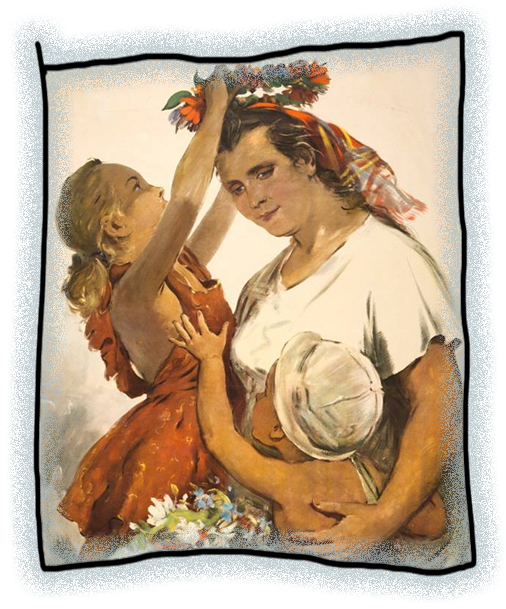
The Kremlin attempted that control for some time, with roots back in Stalinism. While the Soviet Union was the first in the world to legalize abortion, Stalin reversed that decision with the aim to increase the Soviet population. Motherhood was then painted as a fundamental duty to the country, the same as the duty of men to serve in the Red Army. Queer sexuality, decriminalized in the early Soviet years, was also criminalized.
|
| “We Honour the Women-Mothers!” Soviet propaganda poster, 1956 |
|
|
After Stalin’s death, abortion was again legalized, although queer rights remained stifled. As the USSR collapsed, anti-gay laws were repealed — only for Putin’s government to return to a massive queerphobic drive over a decade later.
|
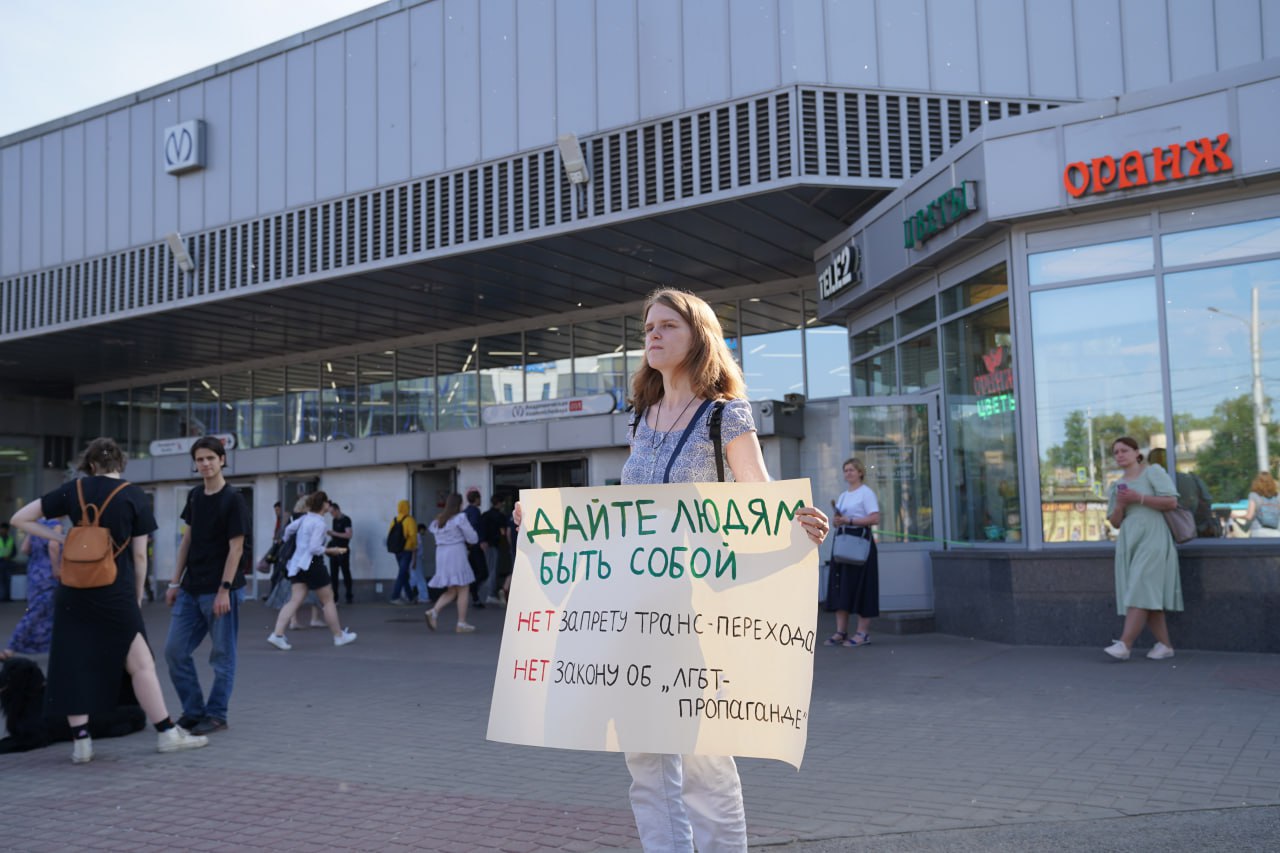
The Kremlin’s queerphobic campaign can be understood as part of Putin’s Russia’s desire to control its people’s bodies. It started with an attack on gay men and women, and slowly the Kremlin began adding on new targets — like trans people, who had their ability to obtain gender-affirming medications restricted in 2023. |
|
|
“Let people be themselves. No to the transition ban. No to the ‘LGBT propaganda’ law” — activist Elena Ioffe holds a protest sign in St. Petersburg, 16 June 2023 / Photo: RFE/RL |
|
|
Now, a new target might be on the horizon — women’s right to control their own bodies. The dominant United Russia party introduced a draft bill calling for fines for promoting “childfree propaganda”. Childfree is a subculture that formed globally around the 1970s, of people who consciously choose to not have children. In Russia the subculture found some purchase, with social media pages dedicated to childfree content. A ban on childfree propaganda would mean yet another step towards restricting birth control and ultimately restricting abortion.
|
Russian ultraconservatives have long been salivating at the idea of another abortion ban. We have outlined their campaign against queer rights in our piece for Carnegie Politika, which is featured in the digest below. The mechanism of the campaign against abortions is similar — right wing publications run anti-abortion pieces, policymakers propose one outlandish legislative draft after another until something finally sticks. The Orthodox Church is, of course, involved.
|
|
|
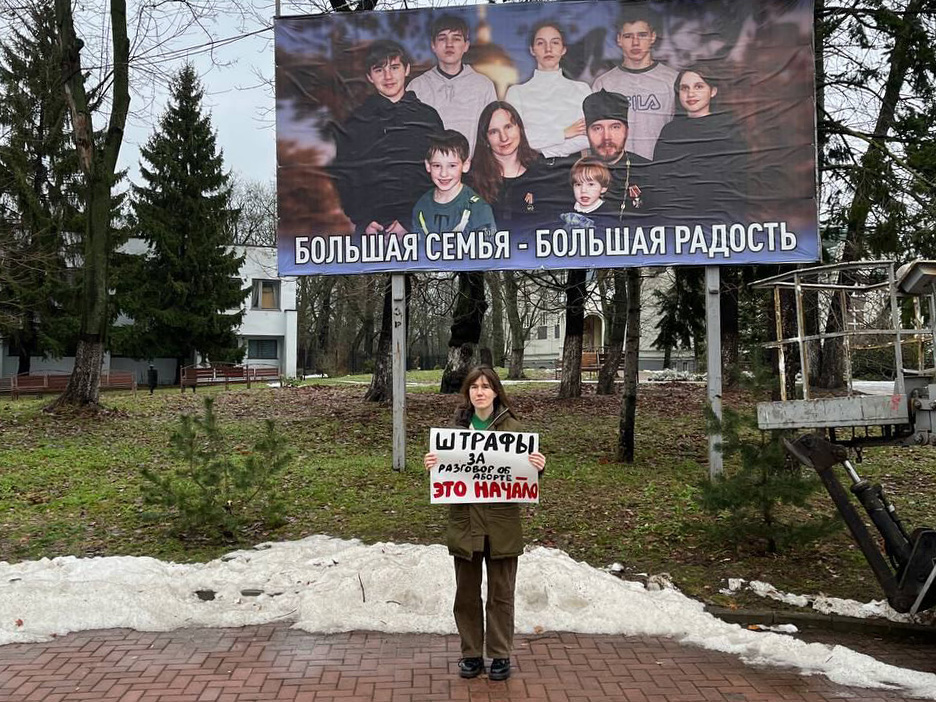
“Fines for talking about abortion is [just] the beginning” — Kaliningrad feminist protesting in front of the propaganda advert “Big Family — Big Joy”, 16 December 2023 / Photo: “Говорит НеМосква” Telegram channel |
|
|
Already, in several Russian regions it is impossible to get an abortion in a private clinic, while state clinics are often overworked and overloaded. One of these regions is Tatarastan, where the children’s ombudswoman has been encouraging a federal ban on abortion. Last year, four Russian regions introduced administrative punishments for encouraging someone to have an abortion. In 2023 it seemed like an abortion ban was on the horizon, but it was pushed back by Russian officials, and even Putin himself.
|
|
|
However, now, with the attack on the childfree movement, I worry that further restrictions on abortion will become normalized in discourse and perhaps in the law, as the Kremlin seeks to further increase its control over Russian bodies.
|
|
|
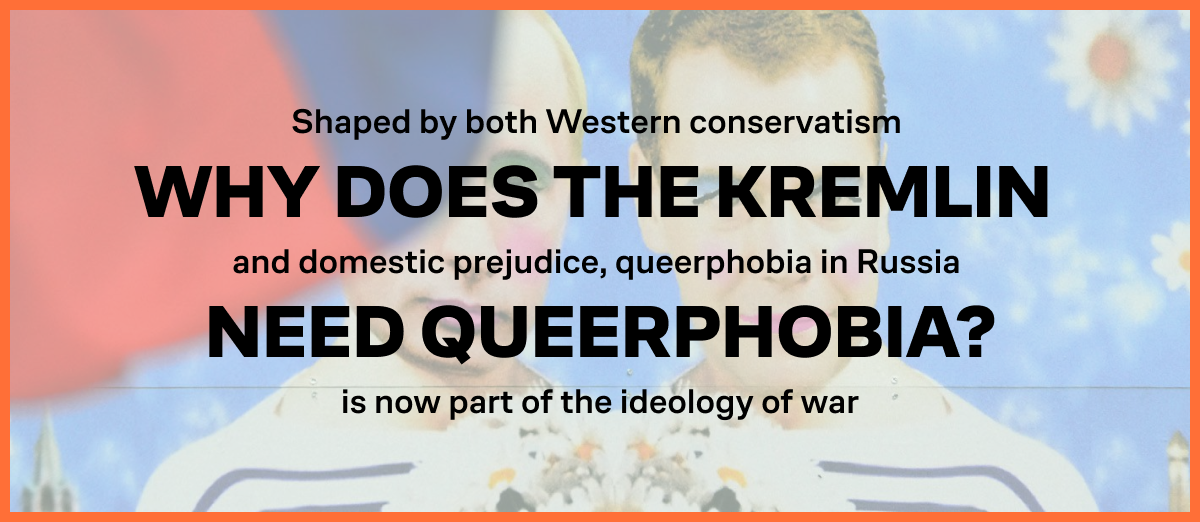
Russia was ranked as the most dangerous place for LGBTQ people in Europe in 2024. But it wasn’t always like that. Despite some stereotypes, Russian society is not virulently queerphobic by default. Instead, the country’s anti-LGBTQ drive has been cultivated and honed by the Kremlin, which is motivated by both foreign and domestic policy concerns. Russian officials seemingly want to both appeal to the global conservative movement and build a repressive machine based on domestic conservatism.
| |
|
The Kremlin’s officials love to fabricate entirely imagined organizations as legal entities so that they can then target people they believe are a part of them. You are probably aware of the designation of the “International LGBT movement” as extremist, used to attack gay people throughout Russia. Similarly, the aforementioned attempts to fine people for “childfree ideology” would be a part of this trend.
|
Оne of the first big cases of the Kremlin banning an imagined organization was in 2020 — the designation of the “AUE” movement as extremist. Now, it is worth explaining what AUE is. AUE stands for Arestantsky Uklad Edin / Arestantskoye Urkaganskoe Edinstvo — the Law of the Prisoners’ is One / Prison Criminal Unity.
|
|
|
AUE is a teen subculture, supposedly united by the shared use of prison jargon and ties to the criminal world. AUE has no discernible leaders or even a concrete ideology. What is important to understand here is that prison jargon, jokes and even values sometimes are very much ingrained in Russia’s general population — due to the long history of state oppression and a massive prisoner population. Remember that entire cities in Russia are built around Soviet-era prisons or fully by prisoners.
|
|
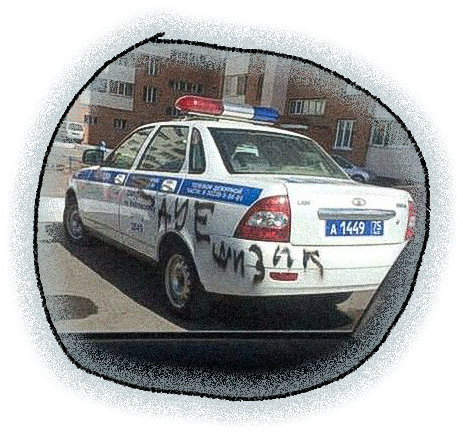
“AUE Schizo” — a vandalized police car in Chita, administrative center of Zabaykalsky Krai, which is considered the “AUE capital” of Russia, 2018 / Photo: Social media |
|
|
This results in prison jargon and aesthetics seeping into everyday language, especially in schools. I remember that in school I was often surrounded by jail jargon — my friends and I used it without giving it much thought. The Kremlin’s ban of AUE was aimed at youth and primarily at these aesthetics, like social media communities, tattoos and so on.
|
And while such a ban might seem harmless, even healthy for young minds, it is important to remember that the Kremlin institutes these bans with the goal to oppress and jail.
|
|
|
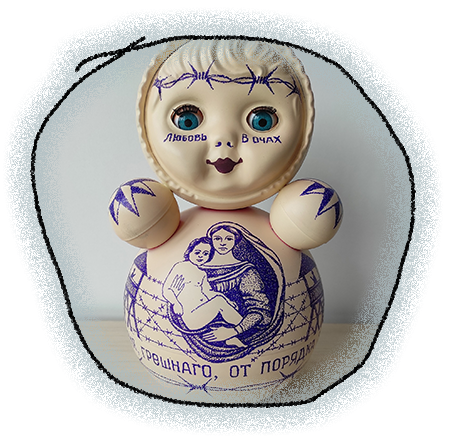
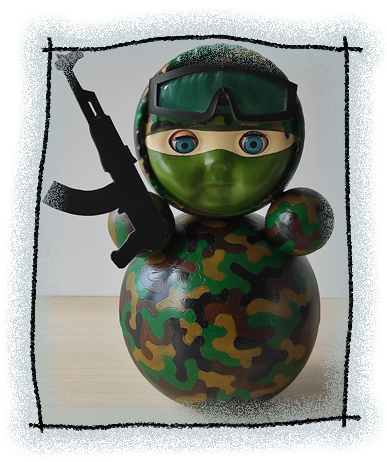
Vasily Slonov’s nevalyashka doll from his “Gulag Toys” series ordered to be destroyed by the Krasnoyarsk court / Photo: Vasily Slonov’s social media |
|
Take the AUE. Just a week ago, an artist was sentenced to a year of mandatory labor, and 15% of his salary docked and paid to the state. His crime? Producing two dolls with Russian prison tattoos. |
|
|
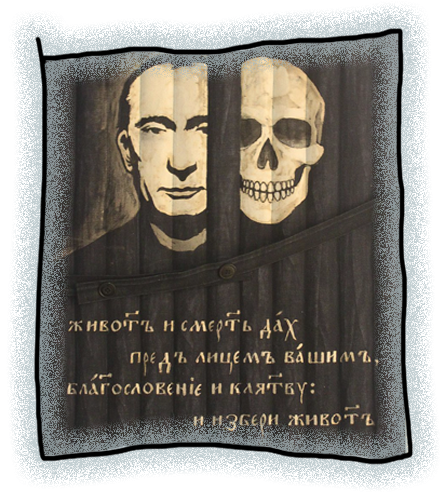
Vasily Slonov sees himself as a part of Siberian Ironic Conceptualism. He’s already irked pro-Kremlin forces — in 2018, the pro-Putin activist group SERB destroyed his exhibition in Moscow. Slonov ran into troubles with the authorities repeatedly, as his high-profile exhibitions were cancelled and critiqued left and right.
|
|
“I have set before you life and death, blessings and curses: therefore choose life” — Vasily Slonov’s work from the “New Jerusalem” exhibition that was raided by pro-government activists in 2018 / Photo: 11.12 Gallery |
|
|
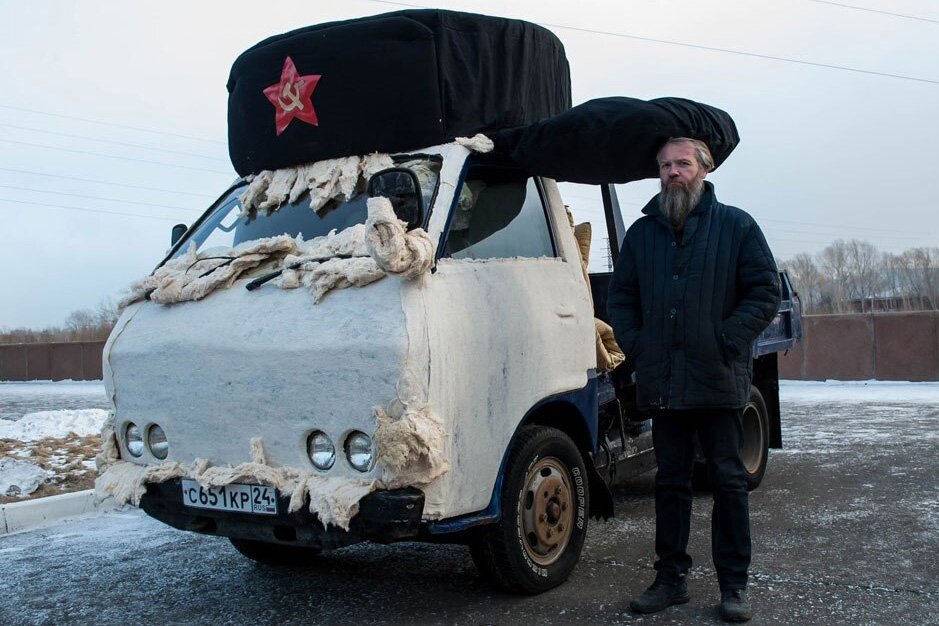
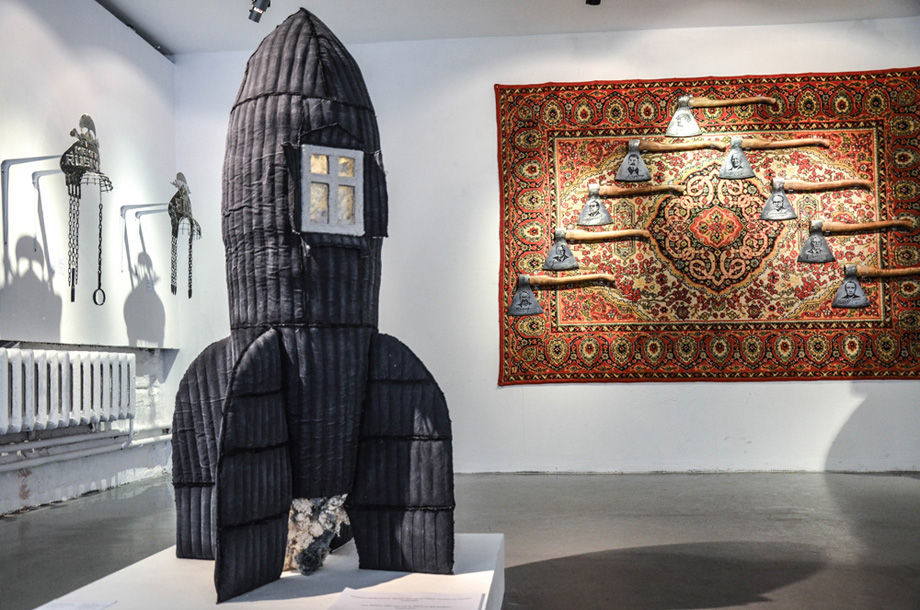
Slonov is a brilliant conceptualist, with a long history of mixed media use, focusing primarily on combining Russian meme culture with serious themes of politics, war, culture — rooted in soc-art, the late Soviet echo of pop-art.
|
|
|
Vasily Slonov with “Vata-mobile”, one of his works from “Vatniks of the Apocalypse” series, 2015 / Photo: RFE/RL |
|
|
The prison tattoos on the nevalyashka doll is Slonov at his finest — combining obscene and innocent. Using this Soviet toy, which has been a staple of every Russian playroom since time immemorial, but combining it with rough prison tattoos has a powerful effect. |
| Another nevalyashka doll from Slonov’s “Gulag Toys” series / Photo: Vasily Slonov’s social media |
|
|
The court claimed the doll displays banned AUE symbols. Defiant, Slonov came to every court hearing with one of the dolls. After hearing the sentence he said: “I am not guilty and my conscience is clear. I justify my innocence as follows: I am an artist. I generate and create works of material culture. I research, artistically comprehend, and enrich the Russian cultural code, folk play and humor culture.”
|
|
|
“Vatniks of the Apocalypse” exhibition in 11.12 Gallery, Moscow, 2015 / Photo: Pelagiya Belyakova, Novaya Gazeta |
|
|
Please answer our questionnaire so we can better understand our audience! |
|
|
The Moscow Times / Podcast |
|
|
Sources cited in the reading list are not necessarily aligned or in a formal partnership with us. It is just what the editor finds interesting. |
|
|
The Digest is created by OVD-Info, written by Dan Storyev & Inna Bondarenko; edited by Dr Lauren McCarthy |
OVD-Info English newsletter privacy policy: how we work with your data |
|
|
|