EXPLAINING THE STRUGGLE FOR HUMAN RIGHTS IN RUSSIA |
|
|
Hello and welcome back to the Digest. |
Today we are briefly discussing International Women’s Day and our new initiative of publishing analytical opinions from top experts. |
In solidarity, Dan Storyev |
|
|
Donate to OVD-Info to keep us running |
|
|
Trigger warning:
This is a newsletter about Russian repressions. Sometimes it will be hard to read. |
|
|
Micropolitics of Resistance |
| |
I’m happy to say that OVD-Info now publishes original content in English, dedicated to helping you peek behind the new iron curtain. We aim to illuminate Russia’s struggle between civil society and the authoritarian state, and hope to publish both guest authors and our own experts. Always feel free to email me with any suggestions or ideas on topics we should cover. |
|
|
The first piece we published is by Jeremy Morris, a sociologist and professor at Aarhus University in Denmark. In his piece Morris draws on the lessons from his upcoming book to explain how small civic acts in Russia can work as functional resistance:
|
| Jeremy Morris / Courtesy photo |
|
|
What should ordinary people do with their feelings of despair and helplessness in the face of naked power grabs by cynical figures? This is the question many civic-minded Russians face. The election of Trump might seem very distant from the realities of Russian society at war, but many Americans now find themselves asking the same questions, caught in a similar emotional landscape.
|
It’s easy for Americans to react further in two unhelpful ways: either the system will be robust enough to stop the descent into oligarchic dictatorship, or that the actions of individuals don’t matter, or can’t change things, so it makes no sense to stick one’s head above the parapet. Often this leads to the worst kind of ‘inner emigration’ where people detach themselves from any and all forms of social solidarity or civic work, retreating into the husk of the individual...
|
|
|
International Women’s Day |
|
|
Last weekend we marked International Women’s Day. Unfortunately, many female dissidents had to celebrate while in Russian prisons. Out of the 1,529 of politically imprisoned people in Russia, 136 are women. Putin’s propaganda pretends to protect conservative values, among which, as they state, are the sanctity of womanhood and especially motherhood. However, the reality is quite different.
|
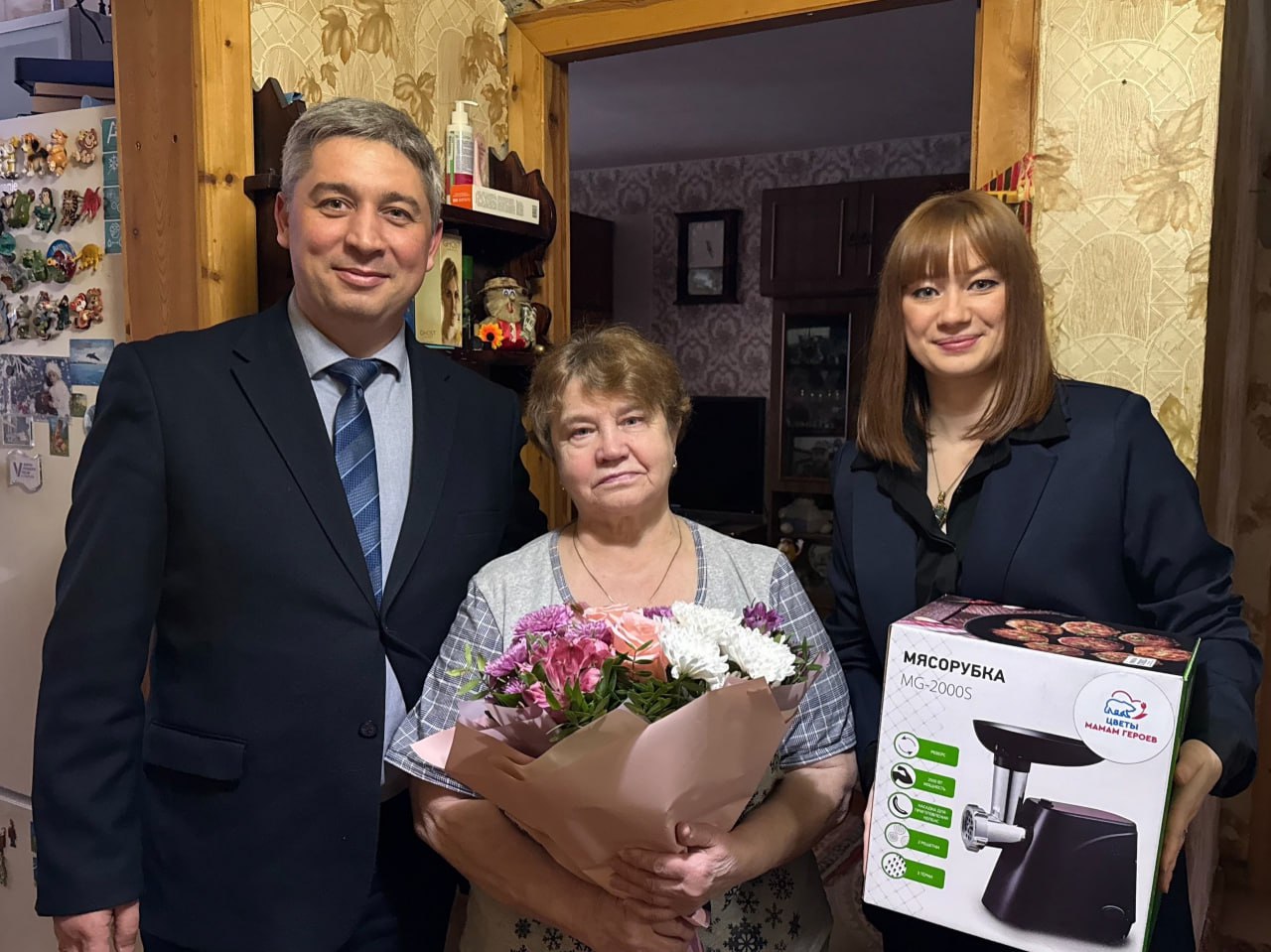
The ruling elites betray the conservative image of protecting women and girls in the most grotesque ways. Take the photo that surfaced last week — the ruling United Russia party posted a picture of their visit to the grieving mothers of Russian soldiers killed in Ukraine. Due to the sorry financial situation in the communities which are targeted by the Kremlin’s recruiters, such visits are accompanied with gifts of basic home appliances or cheap cars. This time United Russia decided to bring the mothers some meat grinders. Party officials insist that this is what the women asked for.
|
|
|
Photo published by United Russia’s Polyarnye Zori city branch |
|
|
The Kremlin is also not shy about jailing women, even those who are elderly or vulnerable. Out of all the women political prisoners I have covered here, two stand out to me in how they represent different vectors of the Kremlin’s repression.
|
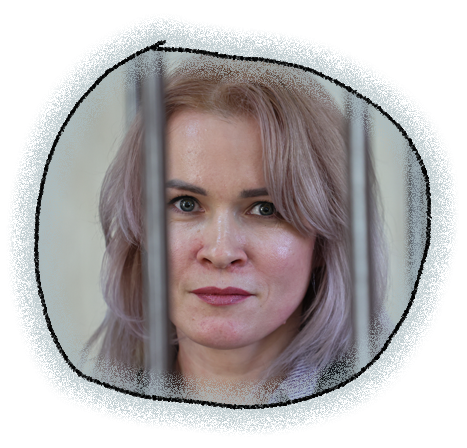
The first is Maria Ponomarenko, born in 1978. I covered her in several issues of the Digest (#4, #47). Ponomarenko is a journalist from Barnaul, a town in Siberia. Her Telegram channel had a little over a thousand followers when she was using it. Then she made a post there about the Russian army’s illegal strike on the Mariupol Drama Theater, which killed some 300 civilians according to the OSCE. This was enough for the authorities to come after Maria.
|
Maria did not relent and refused to admit guilt. “You are not alone. Start talking, start doing something” — she addressed her fellow Russians in court. |
| |
Maria Ponomarenko / Photo: SOTA |
|
They sentenced her to 6 years in jail with a consequent ban on practicing journalism. While in jail, Maria attempted to take her own life over the mistreatment she faced — like being locked in a cell where the window was deliberately covered to prevent any sort of sunlight from entering, or being forced into punitive psychiatric treatment.
|
|
|
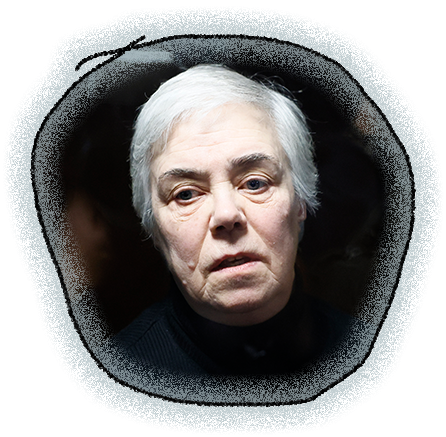
The other is Nadezhda Buyanova. While Maria’s story might seem shocking at the end — after all, she spoke out against the regime — Nadezda was jailed for no apparent reason. A career paediatrician, Nadezhda is 69 years old, and worked in a Moscow hospital for decades. All it took was her patient’s mother claiming that Nadezhda criticised her late husband’s military service in Ukraine. There was no evidence of an altercation, and the clinic’s CCTV doesn’t confirm anything either.
|
|
|
The woman’s claim, posted on social media, made headlines in the pool of pro-Kremlin Telegram-based media — and prompted a harassment campaign culminating in the authorities destroying Nadezhda’s apartment in a raid and even taking her passport. Nadezhda was born in Ukraine, but acquired Russian citizenship after the Soviet collapse.
|
| Nadezhda Buyanova / Photo: OVD-Info |
|
|
On trial, Nadezhda was visibly dumbfounded by the accusation that she fomented “ethnic hatred”: “This is absurd! Hatred is too deep and strong a feeling, it is self-destructive for a person. These feelings are not inherent to me either as a person or as a doctor. Medical professionals provide assistance regardless of the patient’s nationality”.
|
She continued, highlighting the absurdity of the case: “What do you see as political hatred? I am not a politician and I do not intend to engage in politics. I am not on any social network. Watching the news and being aware of world events does not mean understanding politics and engaging in it. I have never been a member of any party, have never been a deputy or a public figure.”
|
Regardless, the court sentenced the elderly medic to 5.5 years in jail, joining many other female political prisoners. There was no amnesty or commutation this March 8. |
|
|
Please answer our questionnaire so we can better understand our audience! |
|
|
The Institute for Global Reconstitution |
|
|
Sources cited in the reading list are not necessarily aligned or in a formal partnership with us. It is just what the editor finds interesting. |
|
|
The Digest is created by OVD-Info, written by Dan Storyev, edited by Dr Lauren McCarthy |
OVD-Info English newsletter privacy policy: how we work with your data |
|
|
|