EXPLAINING THE STRUGGLE FOR HUMAN RIGHTS IN RUSSIA |
|
|
Hello and welcome back to the Digest. |
Today we are talking about Muslim political prisoners. Also I hope you all get a chance to read our Foreign Policy op-ed. |
In solidarity, Dan Storyev |
|
|
Donate to OVD-Info to keep us running |
|
|
Trigger warning:
This is a newsletter about Russian repressions. Sometimes it will be hard to read. |
|
|
This week we are moving towards the conclusion of Ramadan, a holy month for Muslims around the world. It is a month of daily fasting and sundown feasts, culminating in the Eid celebration. Tonight, Muslims around the world will mark the Laylat al-Kadr, or the Night of Power. Many Muslims will mark it in jail — as political prisoners.
|
Russia is host to Europe’s largest Muslim population, mainly due to Moscow’s imperial expansion — be it into the Tatar Volga region or into the Caucasus or more recently into Crimea. Russia jails plenty of Muslims — who now have to observe Ramadan, and other traditions, while faced with a brutal prison system.
|
|
|
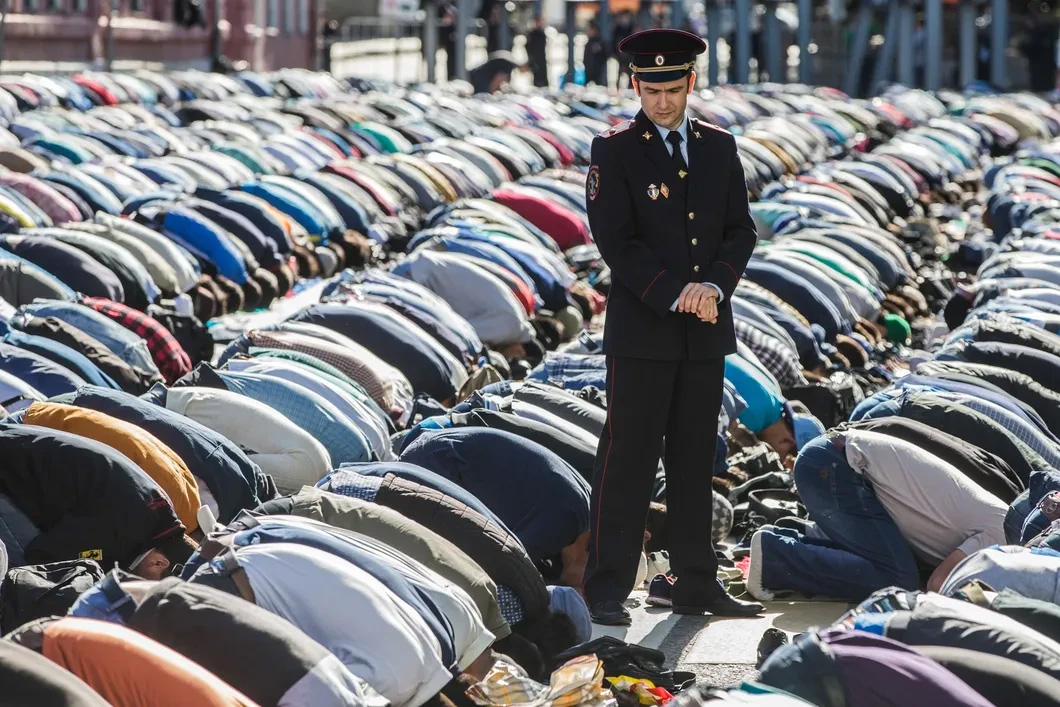
Eid al-Fitr in Moscow, 5 July 2016 / Photo: Evgeny Feldman, Novaya Gazeta |
|
|
Celebrating Ramadan is made extra challenging already by the stringent prison meals schedule. During Ramadan Muslims only eat after sundown, and closer to the end of May daylight doesn’t end until after dinner, meaning that prisoners end up going hungry, since they cannot take food to their cells.
|
Even getting the Koran might be complicated. Before the Kremlin killed Navalny, the maverick dissident was trying to get a Koran while imprisoned. Navalny was not Muslim but was trying to learn more about world religions and test the limits of the jail system. He never got the book.
|
Many jailed Muslims even get penalised for praying — such is the case with jailed journalist Remzi Bekirov. He was routinely punished for praying with a transfer to a punishment cell called SHIZO. A SHIZO is no joke. It is a downright torturous practice wherein a prisoner is placed into an extra cold/hot cell with little space for movement and is given starvation rations.
|
|
|
“I am constantly faced with a choice: either to pray and be punished for it in the punishment cell, or not to pray and be punished for it on the Day of Judgement. In my last speech I said that prisons cannot break our faith,” said Remzi at a trial disputing the illegal punishment cell transfers.
|
| Remzi Bekirov in court / Photo: Crimean Solidarity |
|
|
Remzi is a Crimean Tatar, jailed for 19 years for “organising activities of a terrorist organisation” in a Hizb ut-Tahrir-related case. Just like most Crimean Tatars jailed for their supposed Hizb ut-Tahrir affiliation, Remzi was never proved to have engaged in terrorism. Hizb ut-Tahrir, an Islamist movement outlawed in Russia, was simply chosen by the Russian security services as a boogeyman to justify the new round of repression directed at Crimean Tatars post-annexation — the previous repressive wave was carried out on Stalin’s orders and resulted in the wholesale deportation of Crimean Tatars to Central Asia.
|
|
|
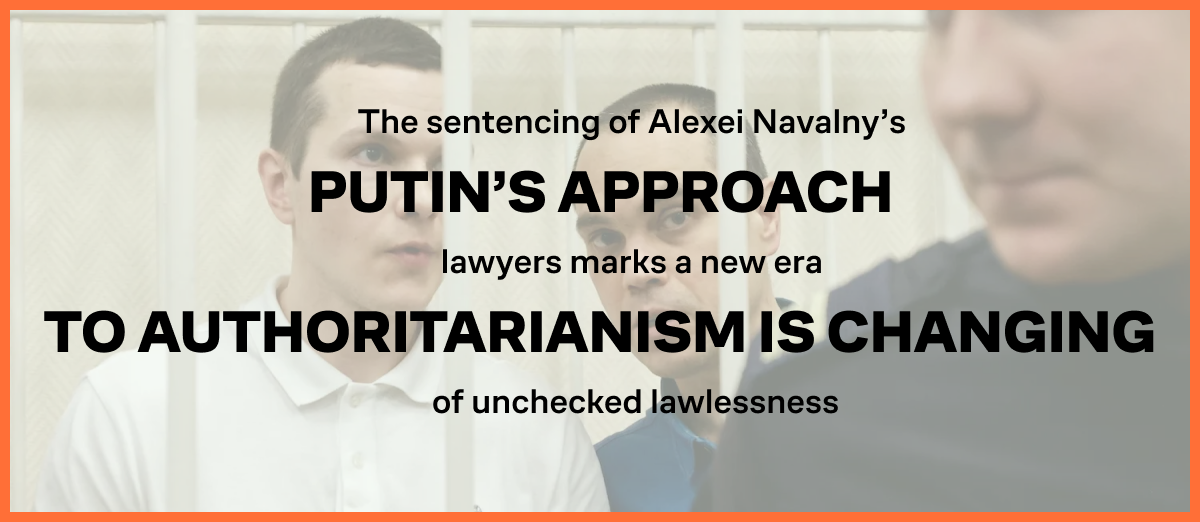
On Jan. 17, a Russian court in Petushki, a small town near Moscow, found three lawyers guilty of “participating in an extremist community.” It was a recent instance of the state using anti-extremist legislation to target critics: The lawyers had defended Alexei Navalny.
|
|
|
Alexander Sizikov / Photo: Crimean Solidarity |
|
The Hizb ut-Tahrir cases reach such sadistic absurdity that one of their most recent victims, Alexander Sizikov, was falsely accused of keeping “extremist literature” produced by the group — while he is blind and physically cannot read the books that the police planted in his house. Regardless, the court sentenced him to 17 years in prison.
|
|
|
Currently 115 Crimean Muslims are jailed for political reasons under the pretext of Islamic terror.
|
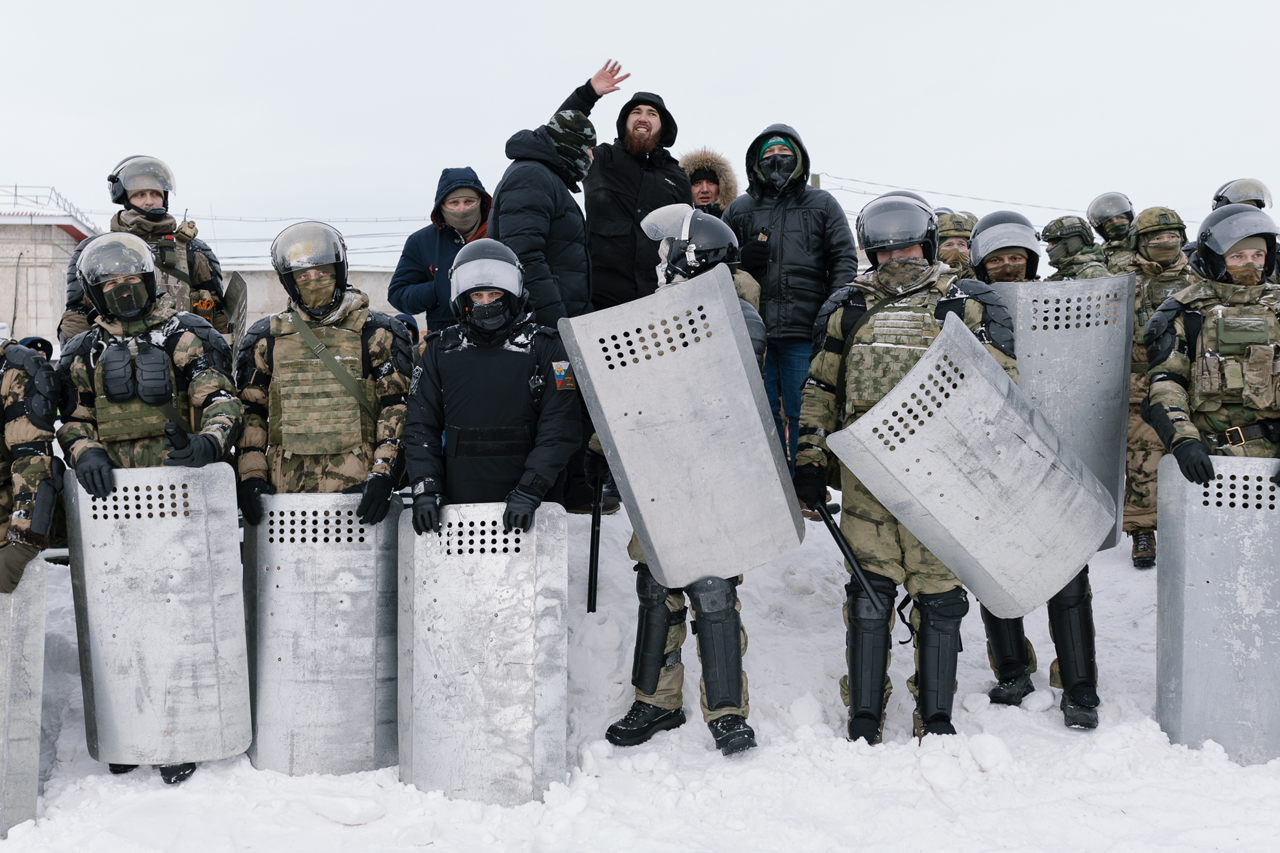
Other primarily Muslim groups that have recently come under the steamroller of the Russian prison system are Bashkirs connected to the epic Baymak protests in support of jailed indigenous activist Fayil Alsynov. Ilyas Bayguskarov was detained a year ago when he was trying to calm down the protesting crowd and was instead labeled as a protest leader. Now he says he is studying the Koran in pre-trial detention.
|
|
|
Ilyas Bayguskarov attempting to calm down the crowd during the Baymak protests, 17 January 2024 / Photo: OVD-Info |
|
|
Nazeera, the wife of a Bashkir now being held in pre-trial detention for participating in the protest, was allegedly accosted in court by the prosecution and the judge — for not having an official marriage certificate. Her rebuttal that they are married under the Muslim Nikah tradition was only faced with more mockery. Nazeera (who spoke with OVD-Info on condition of anonymity, so her name here is changed) says that before the protests she and her husband had other plans for the future: “We took out a mortgage, we thought we’d buy a house. We weren’t interested in politics at all. He wanted to start [praying daily]. Now he prays in the pretrial detention center.” 76 people affiliated with the Baymak protests are in prison today.
|
|
|
Please answer our questionnaire so we can better understand our audience! |
|
|
Sources cited in the reading list are not necessarily aligned or in a formal partnership with us. It is just what the editor finds interesting. |
|
|
The Digest is created by OVD-Info, written by Dan Storyev, edited by Dr Lauren McCarthy |
OVD-Info English newsletter privacy policy: how we work with your data |
|
|
|